Scholarship report by Soham Sen
What happens when you put 650 creative people in a room and give them 48 hours to team up and create a game?
One would imagine chaos, panic and feeling absolutely overwhelmed. But the truth is, it was none of those things, it was Nothing!
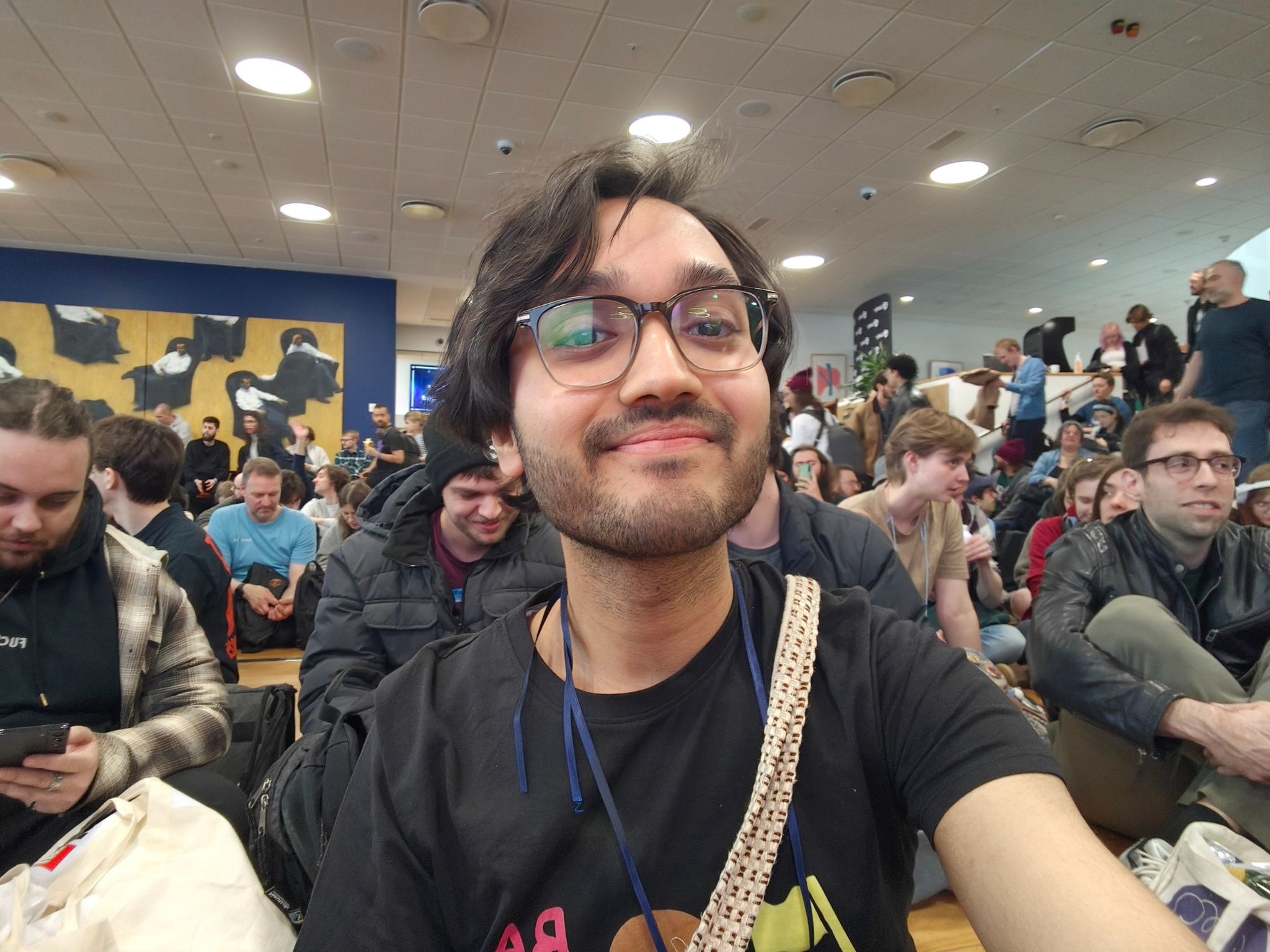
Nordic Game Jam 2026 was a thrilling and rewarding gam jams of my life, filled to the brim with four days of fun, frolic and intense creativity. Many became friends, none became enemies (hopefully), and some became collaborators for life. In this report, I would like to share the amazing time that I had, courtesy the Finnish Game Jam Organisation’s generous scholarship, travelling to Copenhagen and falling in love with the process of making games all over again.
Day 0 – The Journey Begins

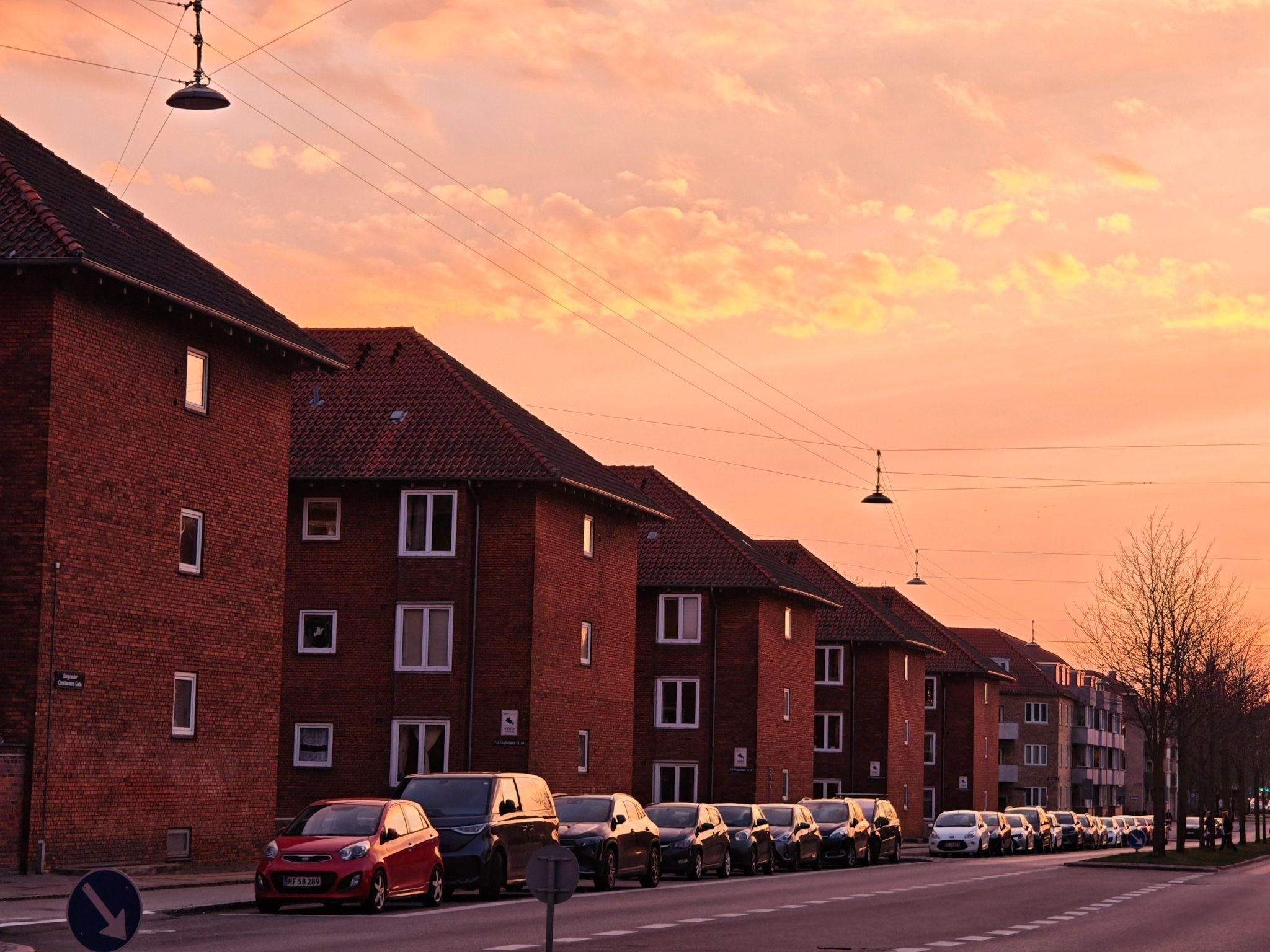
(Left) Sweden over there, Denmark below, (Right) Symmetry everywhere!
I was introduced to Denmark long ago as a child from history books and world maps, and later as a teenager taking a boat trip on the river Ganga, to explore the Danish colonial town of Serampore in India. Naturally, I was curious to meet the Danes, learn more about their culture, and understand if Hygge is serious business or commodified influencer lingo. From my flight window, Copenhagen looked unconventionally symmetrical – tiny buildings arranged in a large space, each looking exactly like the other, wide avenues and narrow neighbourhood streets – almost as if someone had designed it perfectly in Cities Skylines!
That evening I took a walk around the Aalborg University campus and Sydhavn, marvelling at the reflection of the buildings on the canals. The architecture of this part of the city was very unique with its large wide glass windows – something I had not seen in other European cities. These windows covered the whole height of the room, from the ceiling to the floor, and were present in almost every building – shops, galleries, office spaces, residences.
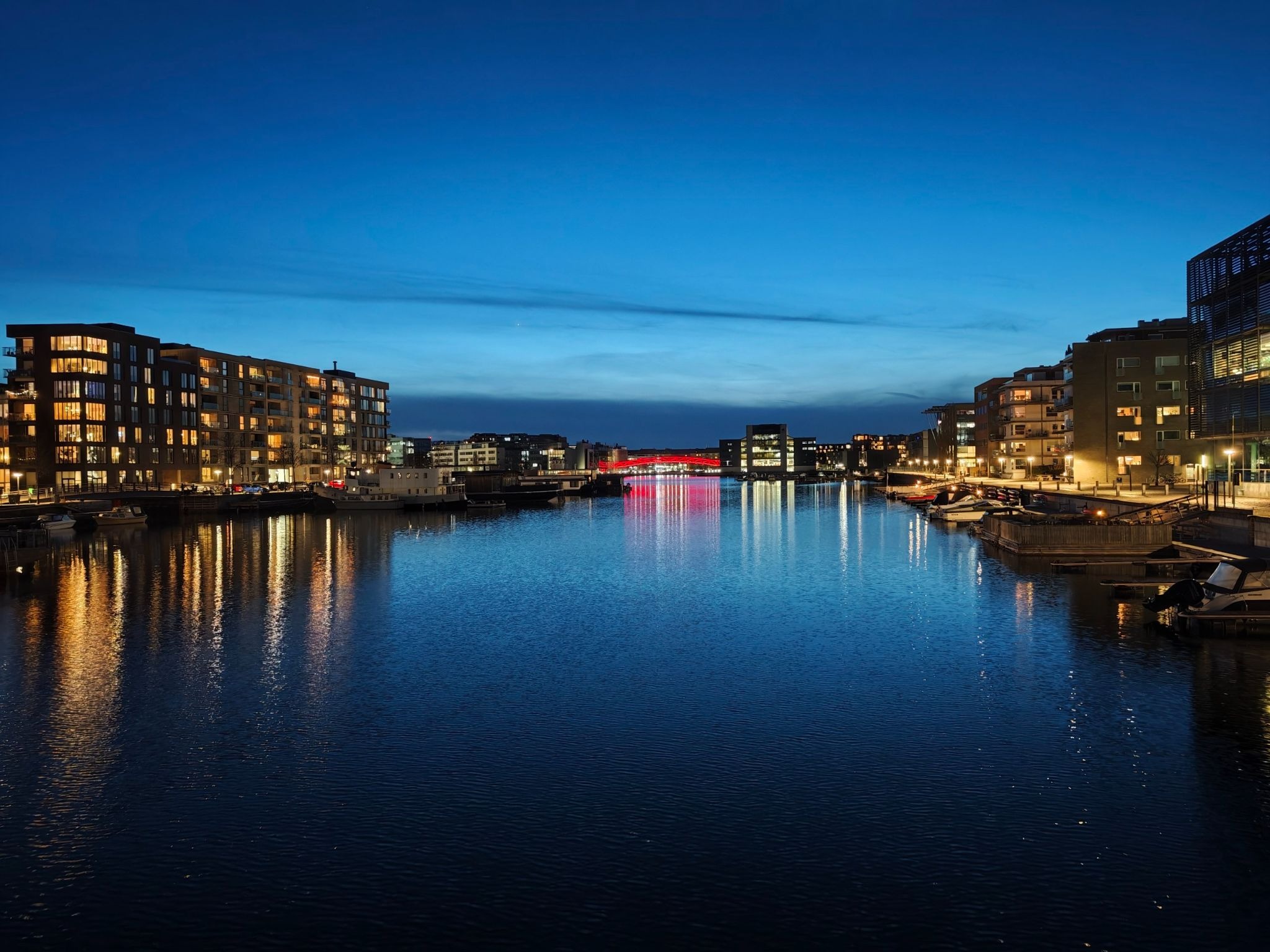
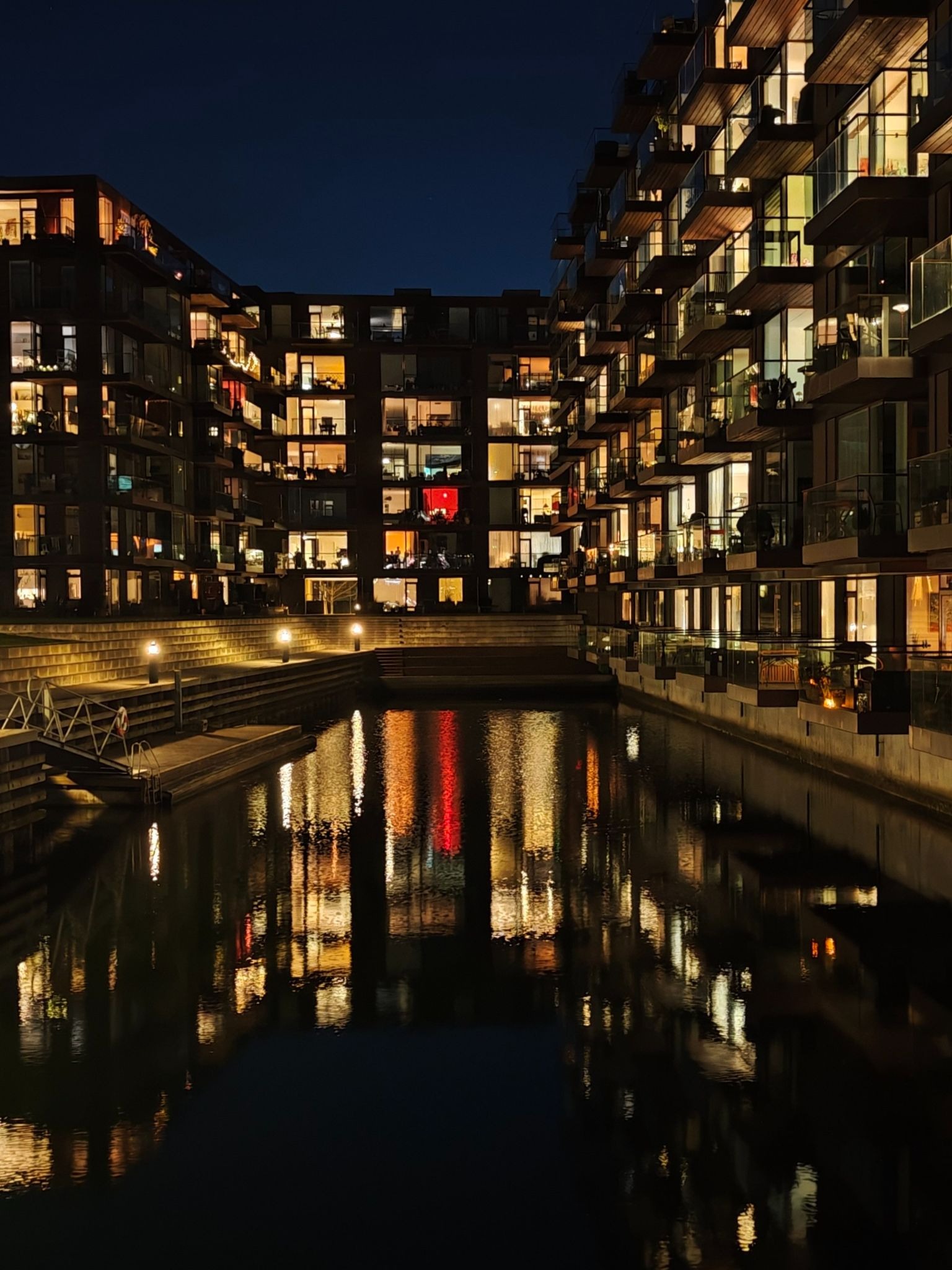
Reflections on the Canals of Sydhavn
I love to soak in the environment when I travel to a new place. The French call it Flânerie – the act of taking a walk to let your creative juice start flowing. Quite essential before a game jam, I would argue!
Day 1 – Salsa and Sore Throat
Nordic Game Jam works differently from most other game jams. After all, it is one of the largest on-site game jams in the world. There are four days of events: the first 1.5 days are filled with talks, networking, and parties; the next two days are packed with jamming and end with a showcase and an after-party, if you still have the energy.
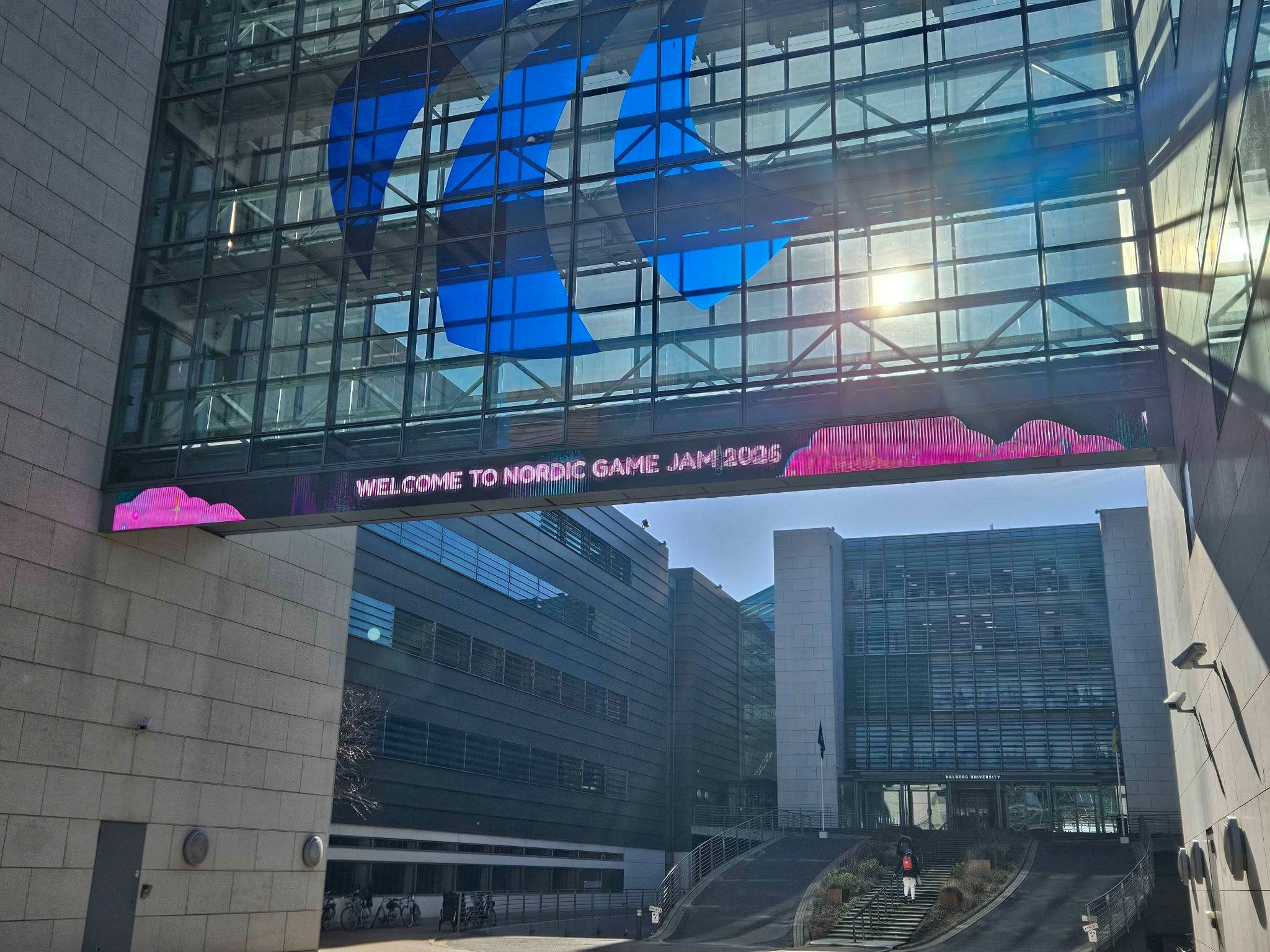
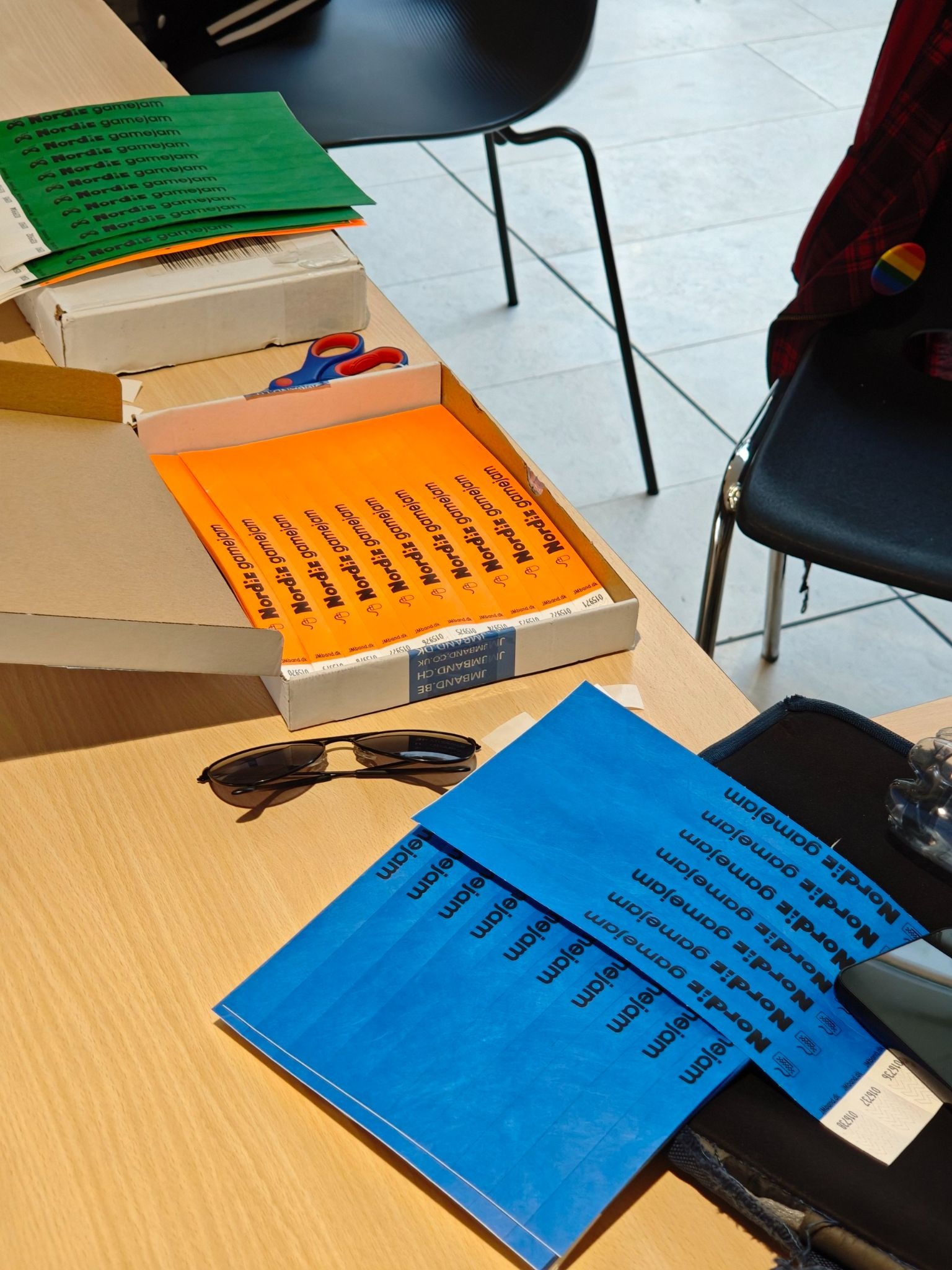
(Left) The entrance to Aalborg University, (Right) Wristbands for the jammers
Having booked a hostel close by, I was one of the first people to walk into the building and grab my wristband and t-shirt. I met up with Toby, the Outreach lead of the Organising team. Apart from him, however, I knew no one else. Being a shy person, this spelt trouble, because I had to form a team before the jam started, not after. In all the game jams I have participated in (including all the Finnish Game Jams), the theme is revealed first, then people pitch their ideas, and finally teams get formed around the idea. But here, teams are supposed to form around people, not ideas. It’s understandable to go for this approach when you have so many jammers participating (the logistics of everyone pitching would take up a long time) so I had to figure out how to choose the right team.
How did I do that? Simple, I let go of my expectations and tried to find people I vibe with.
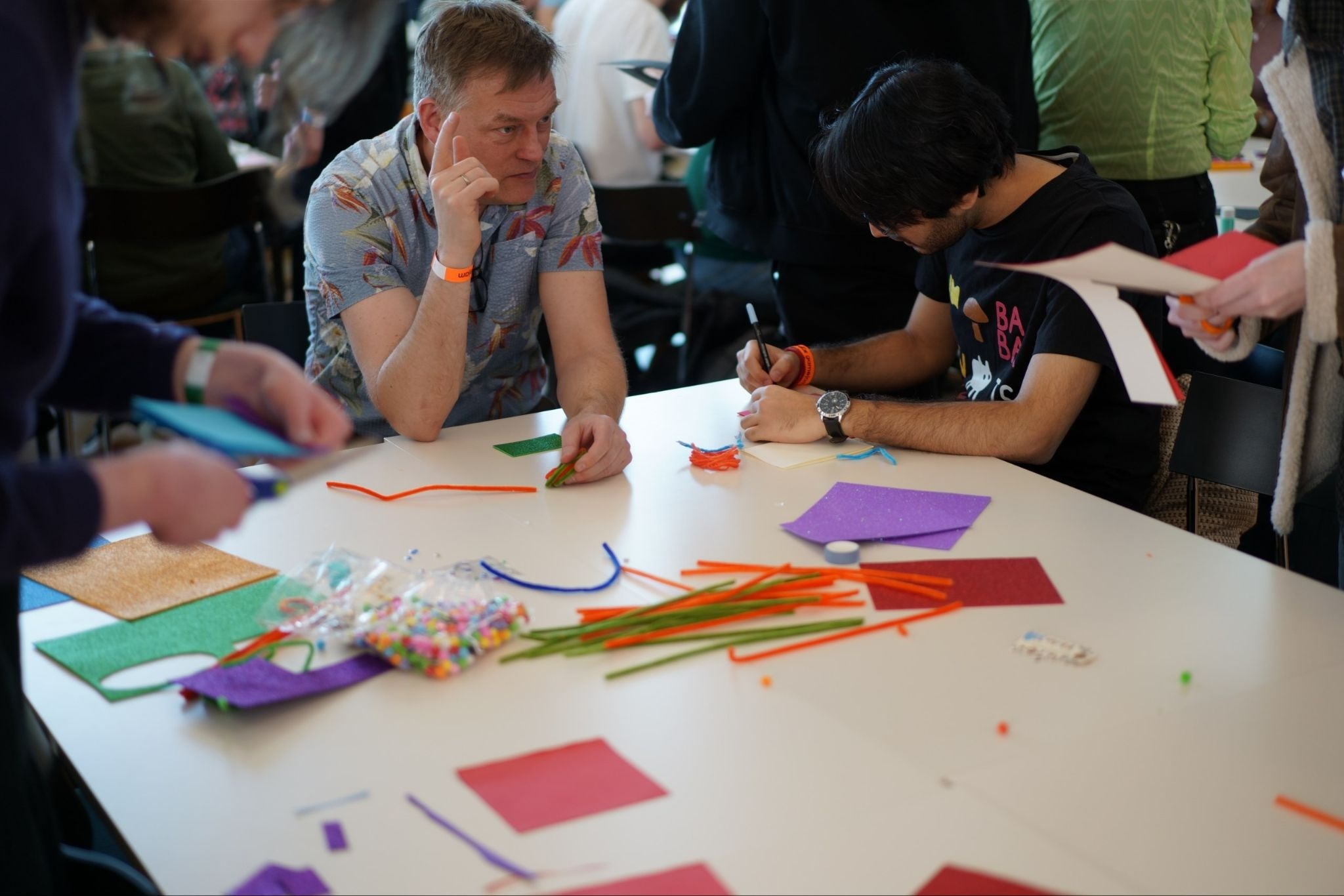
Icebreaker Session where you have to create a badge for yourself
Here’s where NGJ shines more than other events – they hold one-hour icebreaker sessions, filled with fun social games and activities like creating badges, drawing on a large canvas, and playing with LEGO bricks. Most of the people I connected with were ones I met through these icebreaker sessions. As the day progressed, I felt less alone than before.
Note to the readers: It is okay to feel intimidated in a space where you know no one, but trust me, you are not alone, and you will eventually find people interested in talking to you. Just throw yourself out and see what it does!
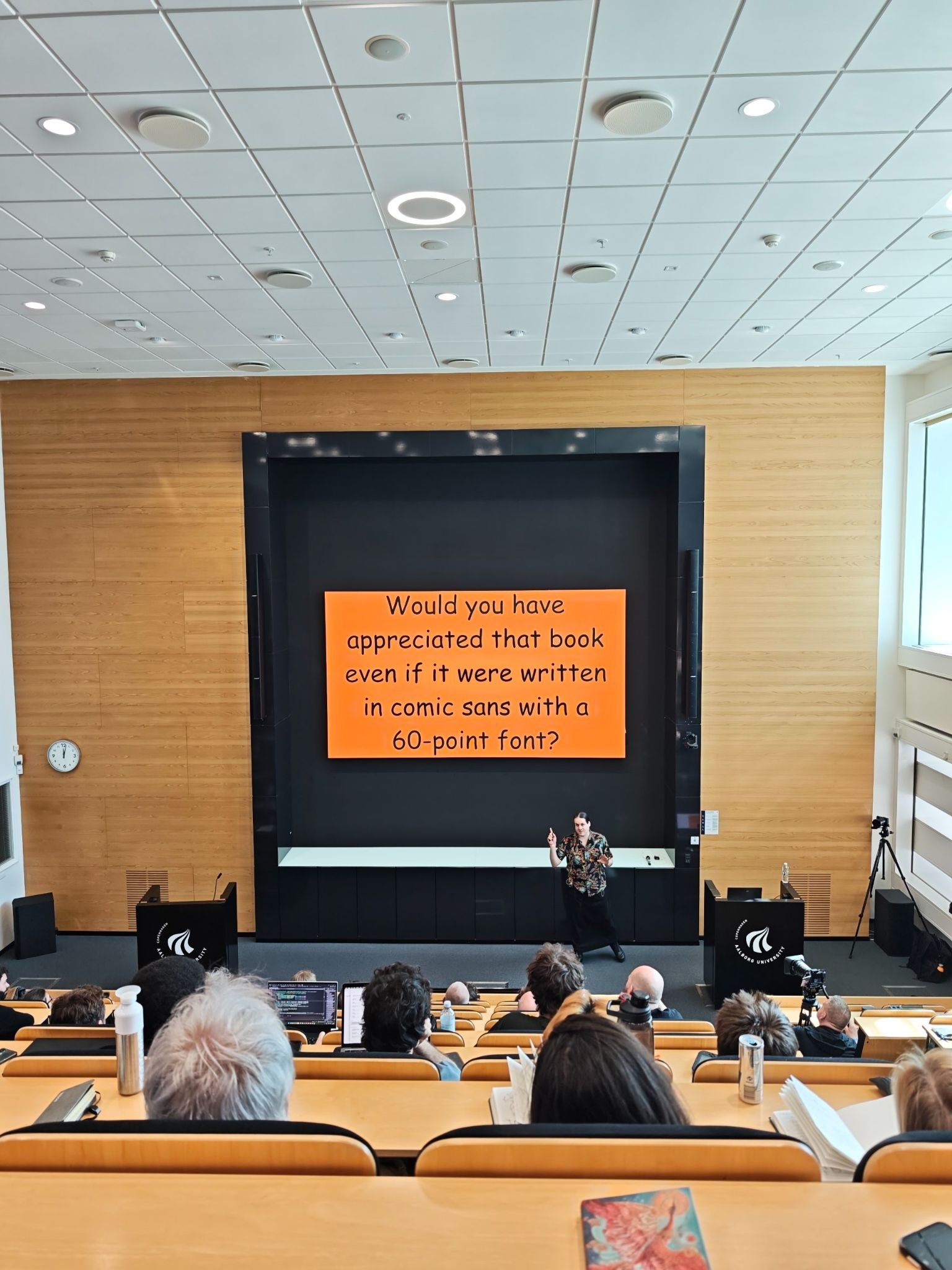
Understanding what contributes to game feel and juice with board game designer Francesco Rugerfred Sedda’s talk ‘Designing the Paragame’
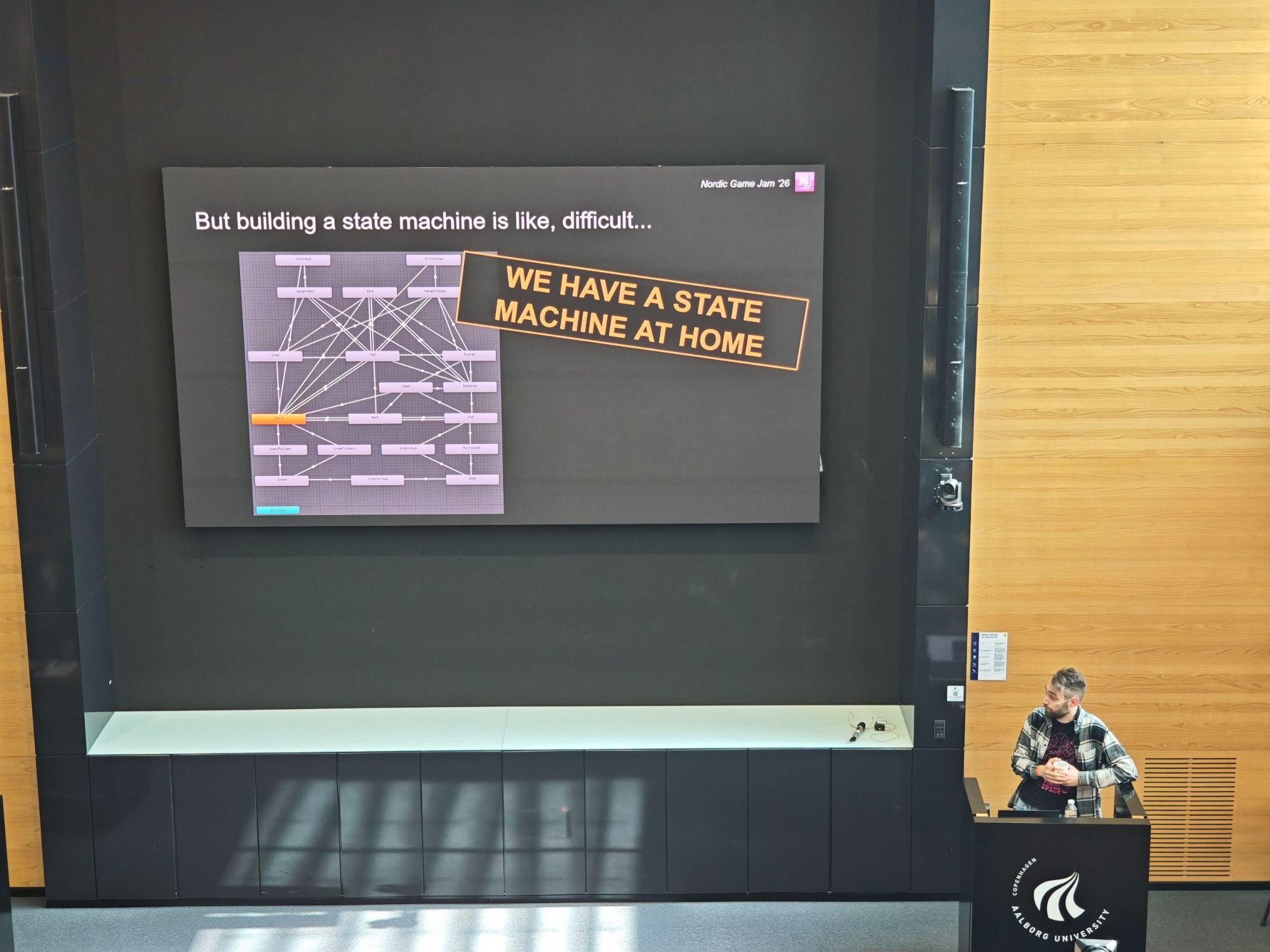
Understanding Code Architecture for Game Jams with Chris Carvelli’s talk ‘Programming Patterns for Game Jammers’
I took Day 1 casually, trying to find people with whom my wavelength matches rather than people who are looking for a more utilitarian team member – someone to code/draw for them, not with them. Post-jam, I found a lot of people who ended up on this path, and felt excluded and left out. I believe my experience also helped me here, as when I was approached by people with an already existing 8-member team wanting to create an action roguelike first-person open world, I immediately turned around and walked the other way, politely, of course.
Note to the readers: Good game jams games are small and effective. Make sure you work on an idea that is minimal, simple, and can be finished in less than a day!
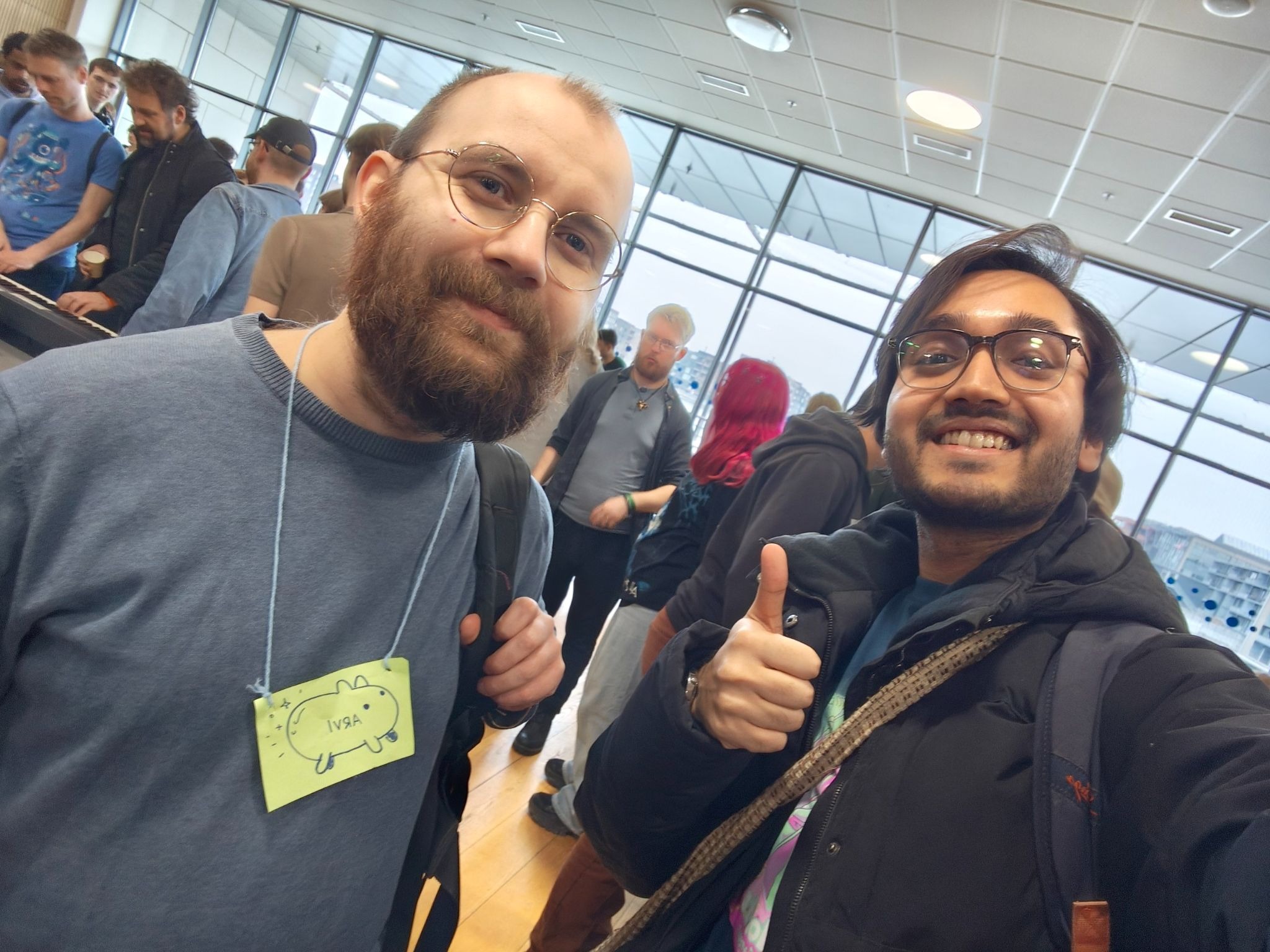
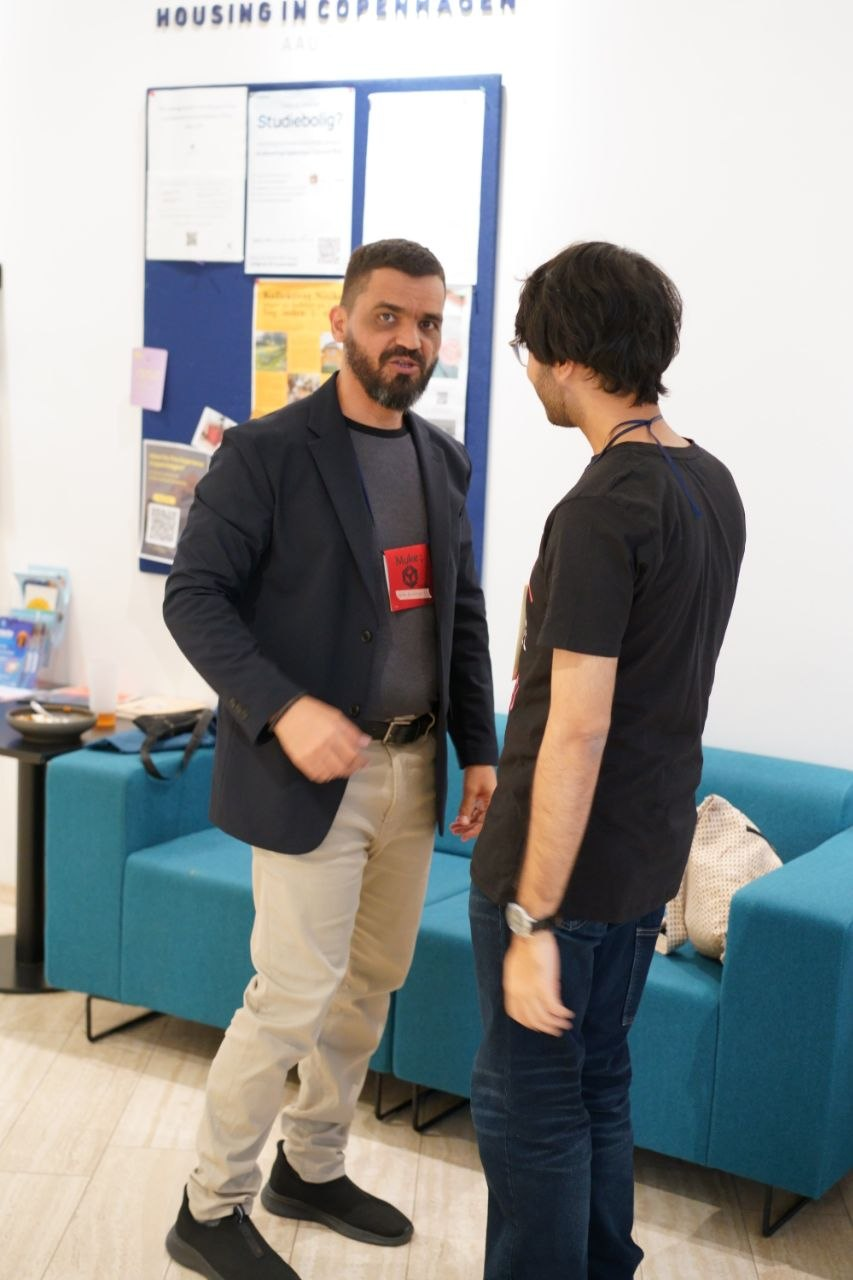
(Left) Meeting Arvi, (Right) Learning Salsa from Muke
After the talks and icebreakers, it was time for the pre-party. While standing in the queue, I ran into Arvi Teikari, the creator of Baba is You. It was nice to find a familiar face from Finland, as Arvi was the person from whom I got to know that the Nordic Game Jam exists. During the party, I had an amazing time getting to know Muke, a Cuban software engineer working in Ecuador. I had always been fascinated by Salsa, and failed horribly in the dance workshop at my university, but Muke taught me the steps so well that I can now dance Salsa effortlessly. Seeing our quaint little Salsa ‘workshop’ at the party, other jammers joined us as well!
The party concluded with a music quiz at night, and there I met Simon, a Danish game dev student with whom I teamed up for a music quiz, and ended up becoming the winners! We got a Chromecast and a free t-shirt from the previous jams, and I became fast friends with Simon.
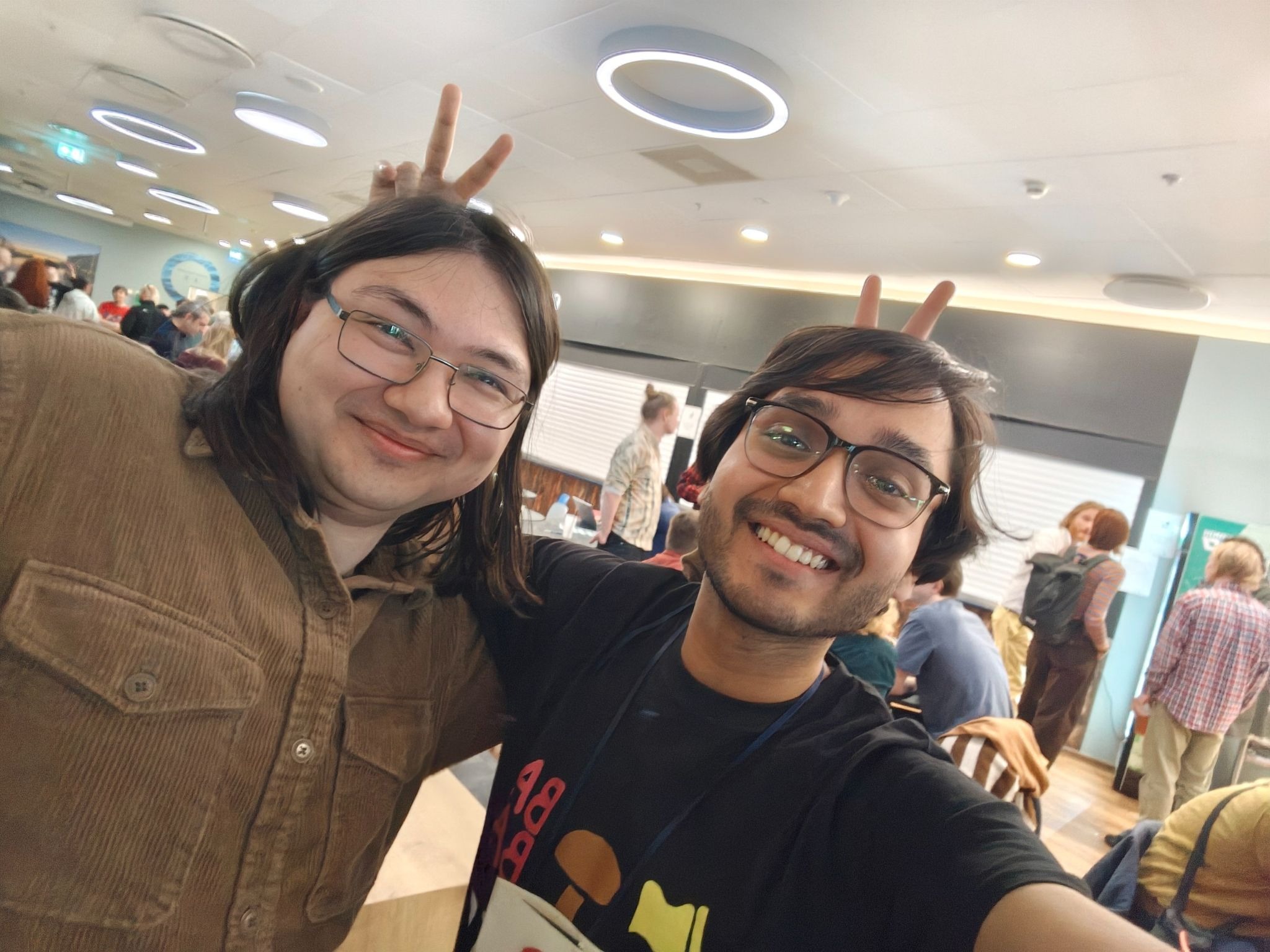
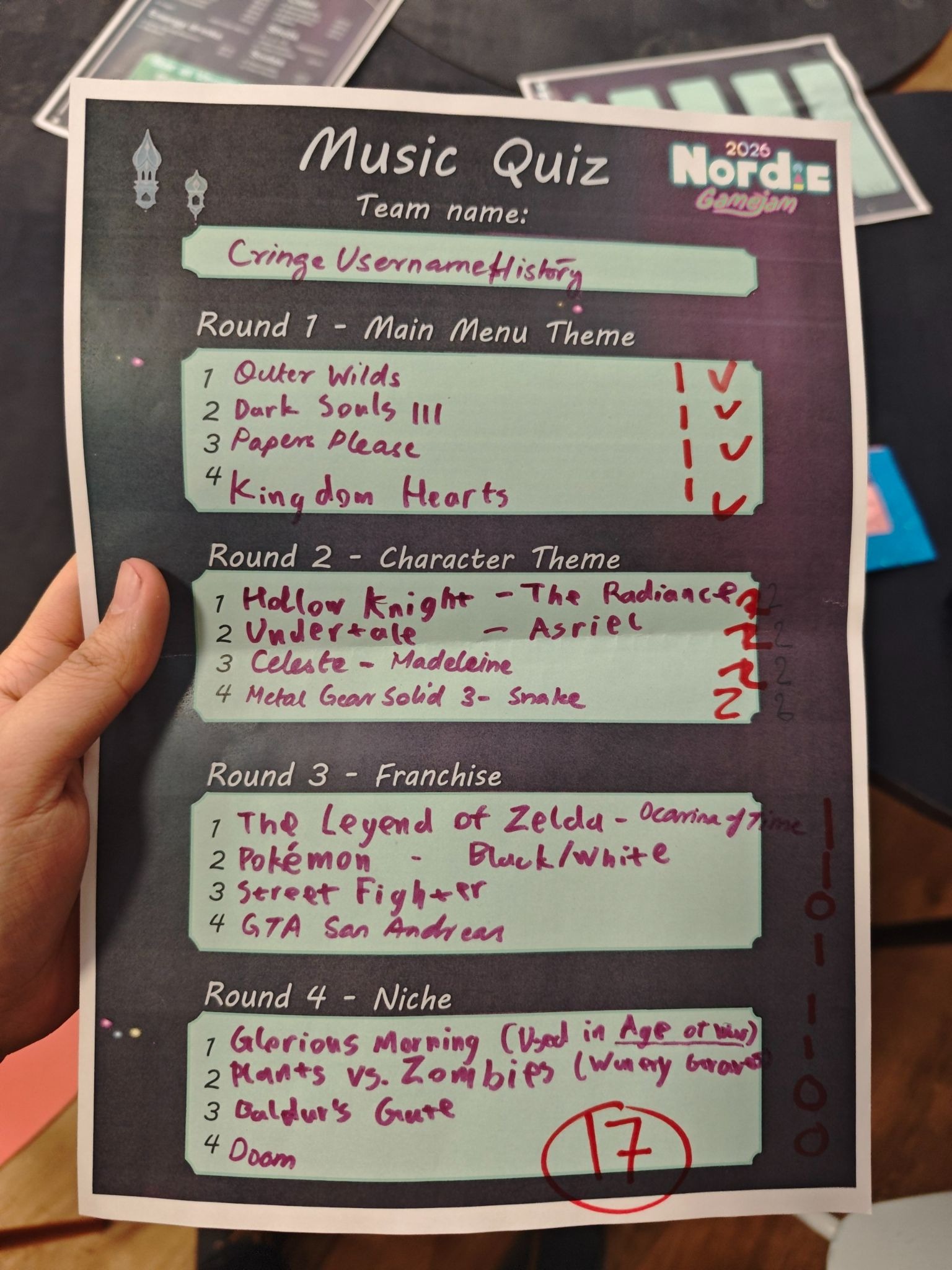
(Left) Simon, (Right) Our winning answer sheet
Even with all its pleasant moments, the day ended on a sour note, as I started throat caught an infection and my hostel roommates made so much noise I couldn’t sleep well.
Day 2 – Community and Lies
Friday morning brought with it both anxiety and excitement; although I was really looking forward to the theme announcement, I was afraid if I would find a good team. I had a clear idea of my own expectations – I wanted to make something simple and experimental, so I went around the venue asking people if they were planning to do the same. There were two problems at hand – some of the teams had already come prepared and were looking for optional additions, and the rest were teams which formed on-site, but had different expectations from the jam.
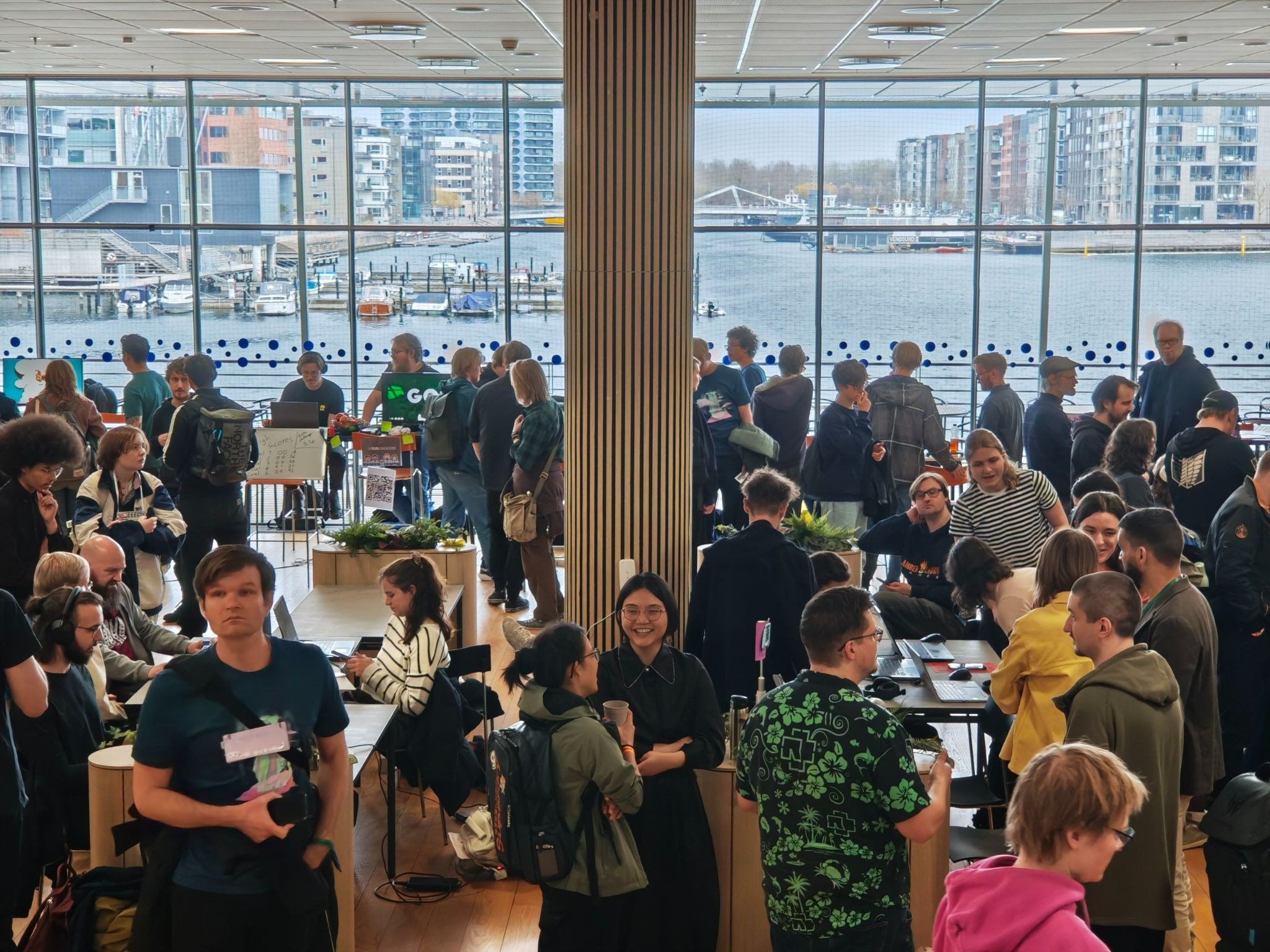
The Industry Showcase, which takes place before the Theme Announcement
The clock was ticking, and there was 20 minutes left till the final keynote and theme reveal. All the people I had met before had already found a team, and I was almost on the verge of joining as an extra in another team or going solo (which is worse!), when Laggy called out to me.
Laggy is an artist from Lisbon who I bonded with the previous day over our shared love for Portugal and similar tastes in games. She said that she found a team with two people – both of whom looked older than me, and were experienced jammers themselves. One of them was an artist and the other a programmer, and both wanted to do something simple and unique.
Bang! I had found the perfect team – in size, experience and vision. My newfound teammates – Didrik and Marios, were an artist and programmer from Sweden and Greece respectively, who worked in a mobile game company in Copenhagen called Trophy Games. They were both veteran jammers and were here to have fun and make something cool, and had already participated in Nordic Game Jam before. I couldn’t have felt more grateful
Note to the readers: If you are in any event and are looking for a team, always pitch your expectations, and find people who match/support them. This makes for the most compatible team in the shortest time.
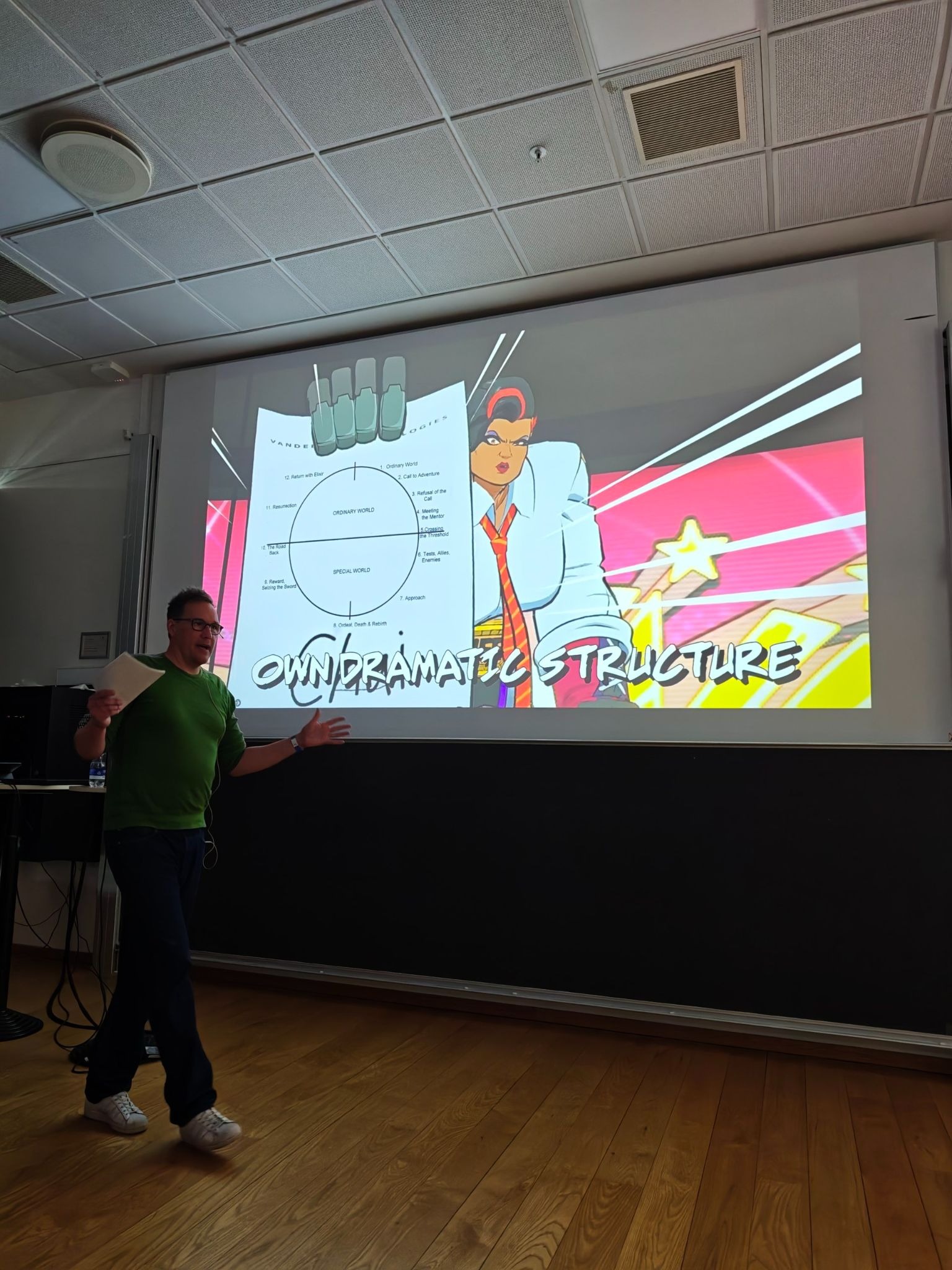
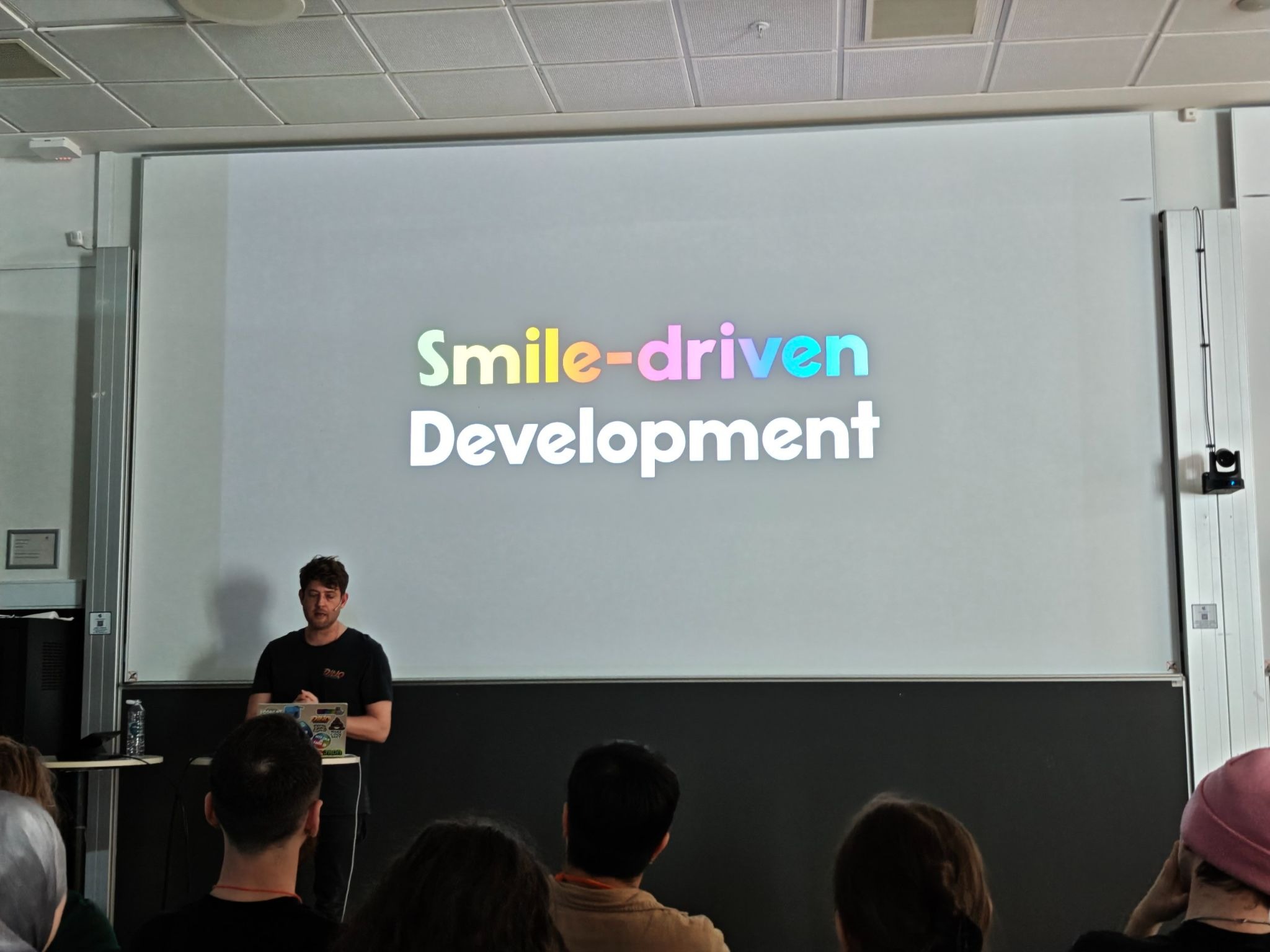
(Left) Morten Brunbjerg’s Post Mortem as an Assistant Writer on Hi-Fi Rush, (Right) Michael Flarup’s Tip to enjoying the process of making games
“What do game designers really do? We create lies.”
Rami Ismail took the stage to deliver the keynote for this year’s jam, and inspired the hundreds of us who gathered in the open space to hear him. Even though the games industry is performing terribly at the moment, the people who make these games are amazing, and Rami asked us to respect and value the people – in our team, our collaborators, and other game creators, as each of us is passionate. This becomes more important in events like this, as people think and perceive the world very differently, and all of us have different values and communication styles; it is important to try to understand each other and empathise, so that we can all get the chance to work on what we love.
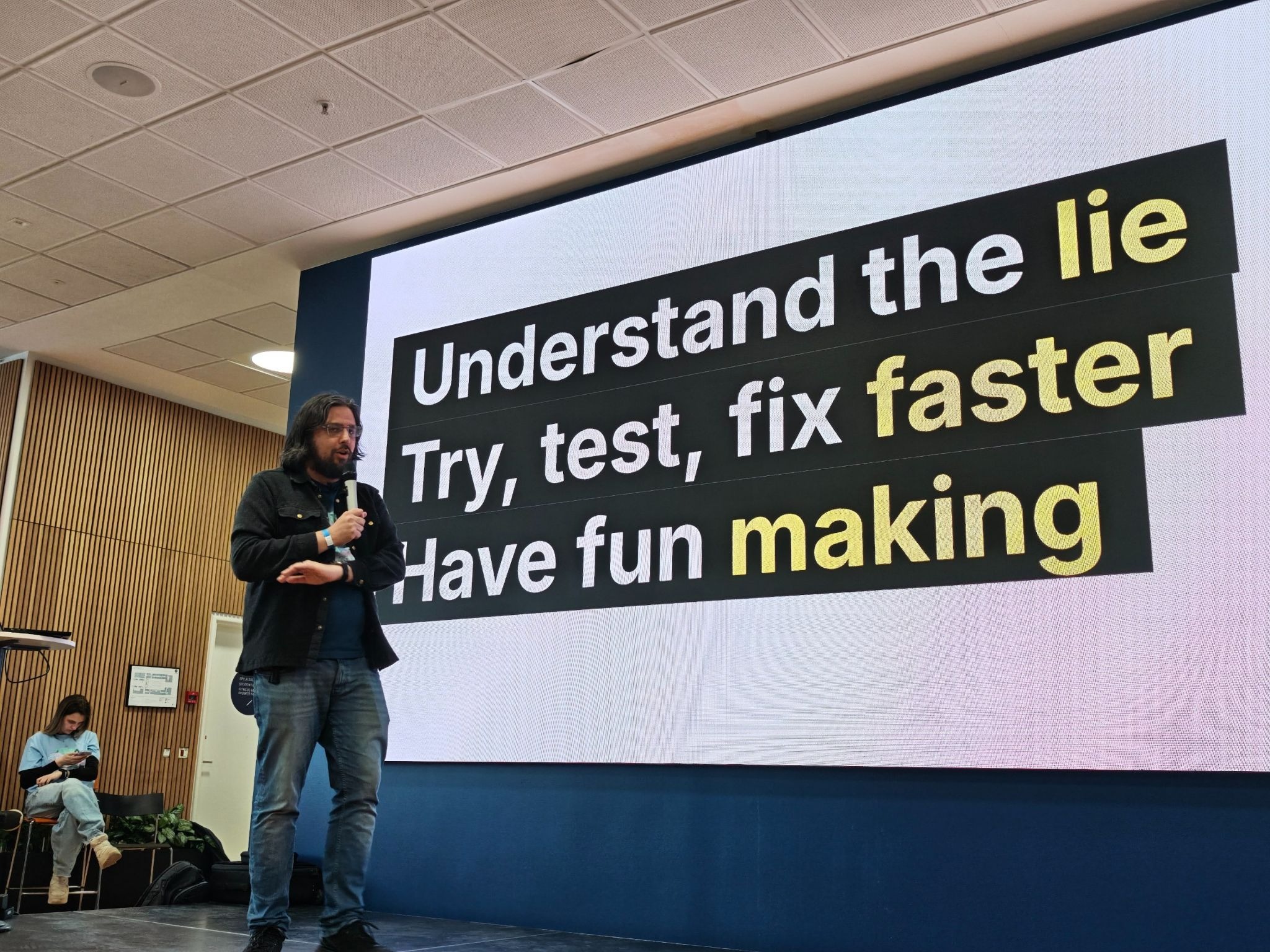
A moment from Rami Ismail’s keynote
Another fascinating insight I learnt from Rami is the 70-25-5 rule. In most of the memorable and good games that we play, not all of it has to be perfect. 70% of the game can be okay, 25% of the game should be good, and 5% of the game should be the best thing that can ever be. Rami encouraged us to go for simplicity and focus on finishing a game, and most importantly, having fun.
The theme reveal was the highlight of the day, in fact the whole jam. Jaime, the lead organiser, kept rolling the slides for the sponsors, rules and other miscellaneous stuff one after the other, while we kept waiting with bated breath as what the theme could be. As we neared the theme reveal slide, we could see a word popping up in the slides, growing from a tiny speck and increasing its font
Community
Community
Community
Community
“The theme for Nordic Game Jame 2026 is…. NOT Community”, Jaime announced, amusing all of us with this on-your-face prank. But then what would the theme be?
“For this year, the theme will be DECIDED by YOU, the community!”, Jaime roared, and all of us felt excited.
(Possible video: video6298466301455113709.mp4)
We would play a game of qualifiers, where Jaime would ask questions to the audience, and we would answer them, leading to a chain of three questions, and ending with a theme. The adrenaline was so high at that moment with all of us cheering and shouting that I barely remember the exact questions, but I remember the final four contenders for the knockout round were – ‘Swimming’, ‘I Can’t Jump’, ‘Cleaning’ and ‘Nothing’, and guess who won the final round?
Nothing. (Possible video: video6298466301455113708.mp4)
The only thing I regret from this whole event was screaming too much, because my throat, which was already sore, got even worse, and then later during the evening, I couldn’t even speak properly. My voice totally broke down, and this stopped me from sharing my own ideas during the brainstorming process. However, my team had a vision which seemed interesting – to create a game where you are invisible, where you are nothing. Laggy introduced us to the term ‘Agoraphobia’, which means the fear of being seen/perceived.
We brainstormed for a couple of hours and came to the main mechanic – you will be an invisible character in a 2D platformer, and the camera will only follow you if you are in the light. But stay too long, and you will die.
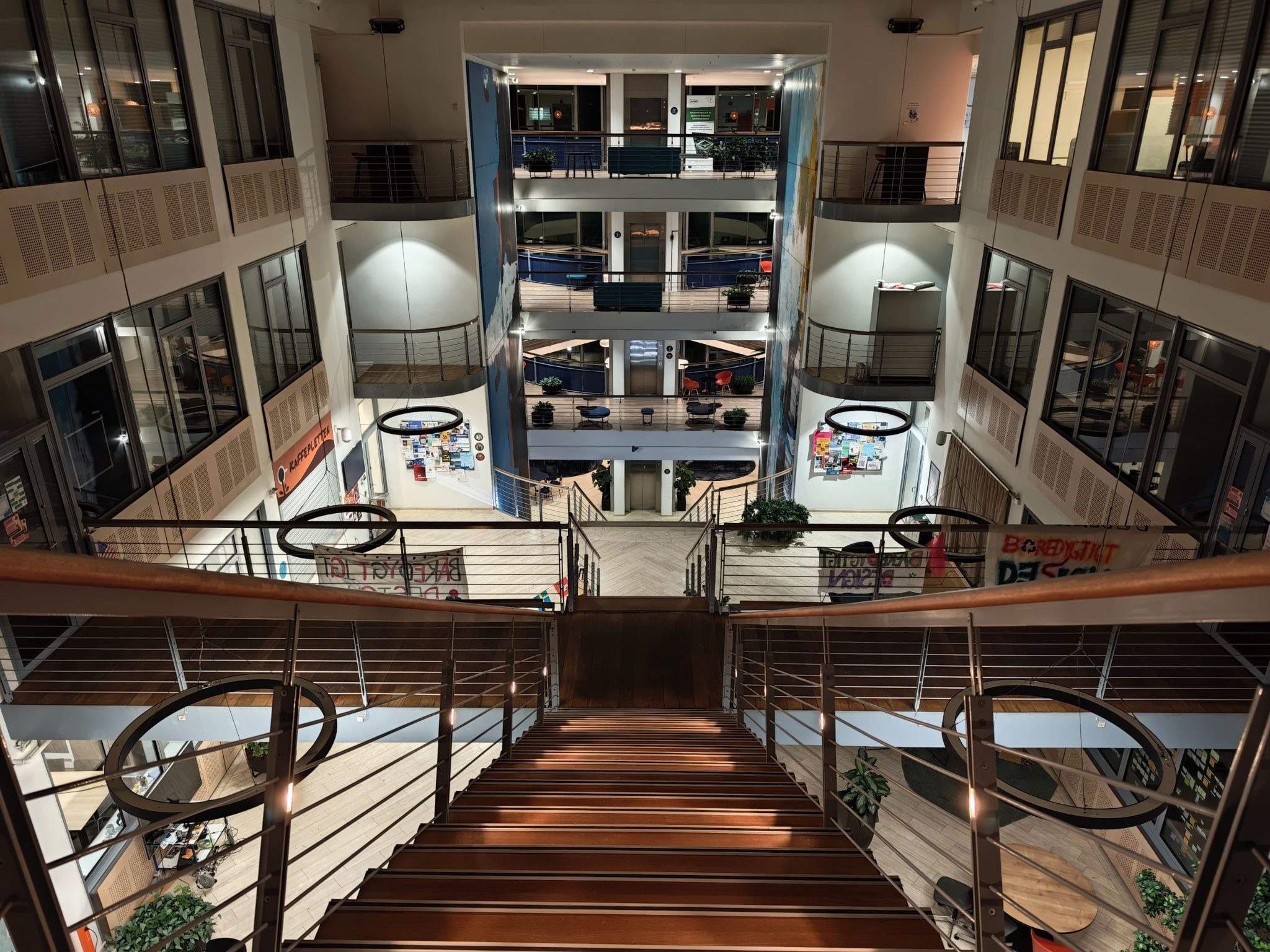
Exploring the Campus building at night
I was really excited to start working on the idea, but we decided to go get a good night’s sleep and start working the next morning.
Day 3 – The Level Design Problem
I wish things were different on Saturday morning. I couldn’t sleep the previous night because of noisy roommates, missed my cup of fine barista coffee (NGJ gives you that for free in the mornings), and was still suffering from the sore throat. However, looking back, only the good bits remain in my memory – working on the game, grabbing lunch with my teammates, going around the venue talking to a lot of different people and playtesting their games.
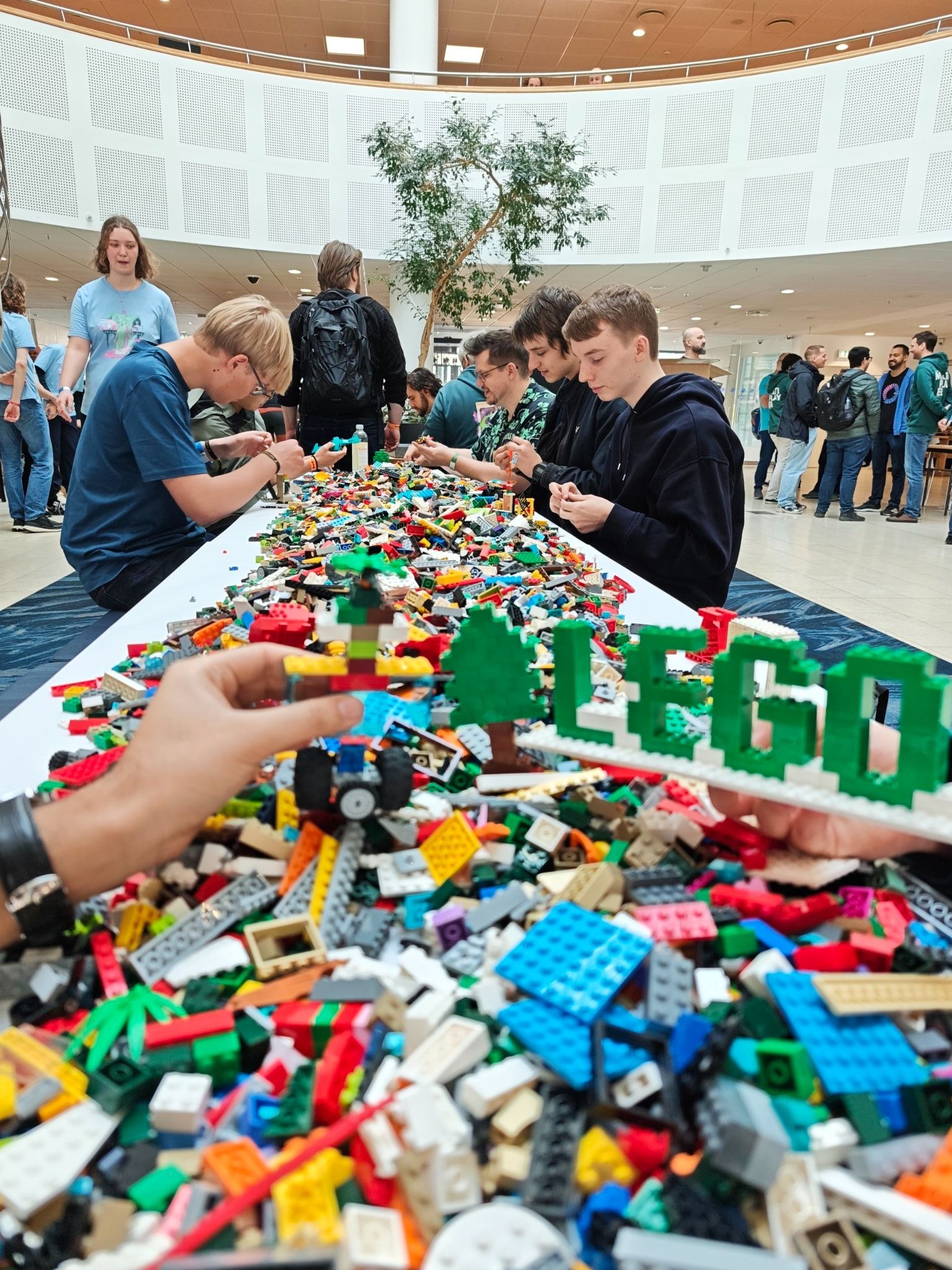
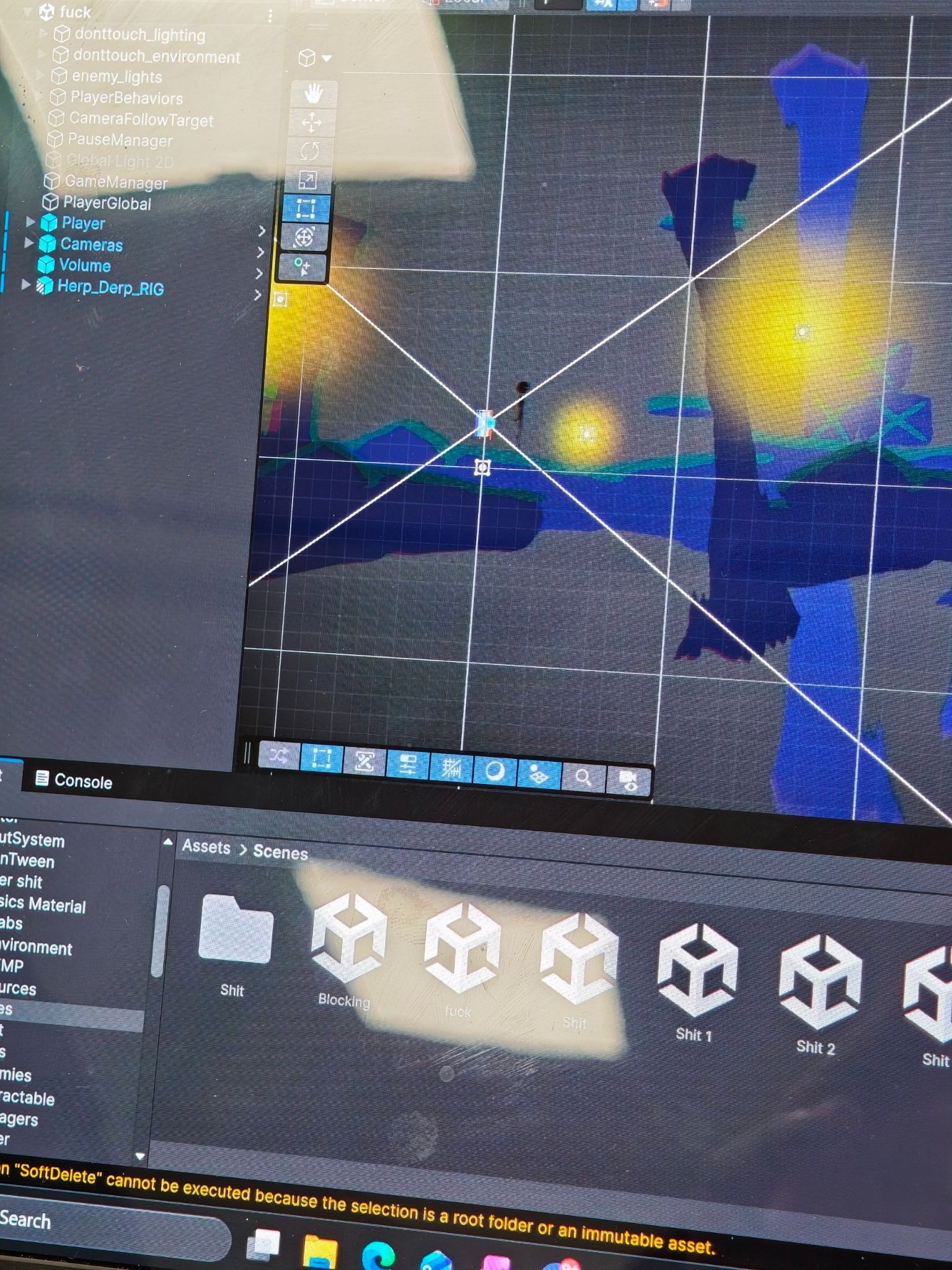
(Left) Building Legos, (Right) Building Unity scenes
I also ran into a lot of people – both familiar and new, like Francisco Múrias, who I met in Portugal in a games seminar class on graphics programming, back in 2024. It was also a really cool moment to meet two former Playdead designers, Peter Buchardt and Laurids Binderup, with whom I got to nerd out about Limbo and Inside, and learnt about their design process on creating the levels of the two games. On Saturday, Nordic Game Jam also offered portfolio reviews, narrative consultation and puzzle consultation, where you can talk to industry professionals about your games, projects, career, and get help from them.
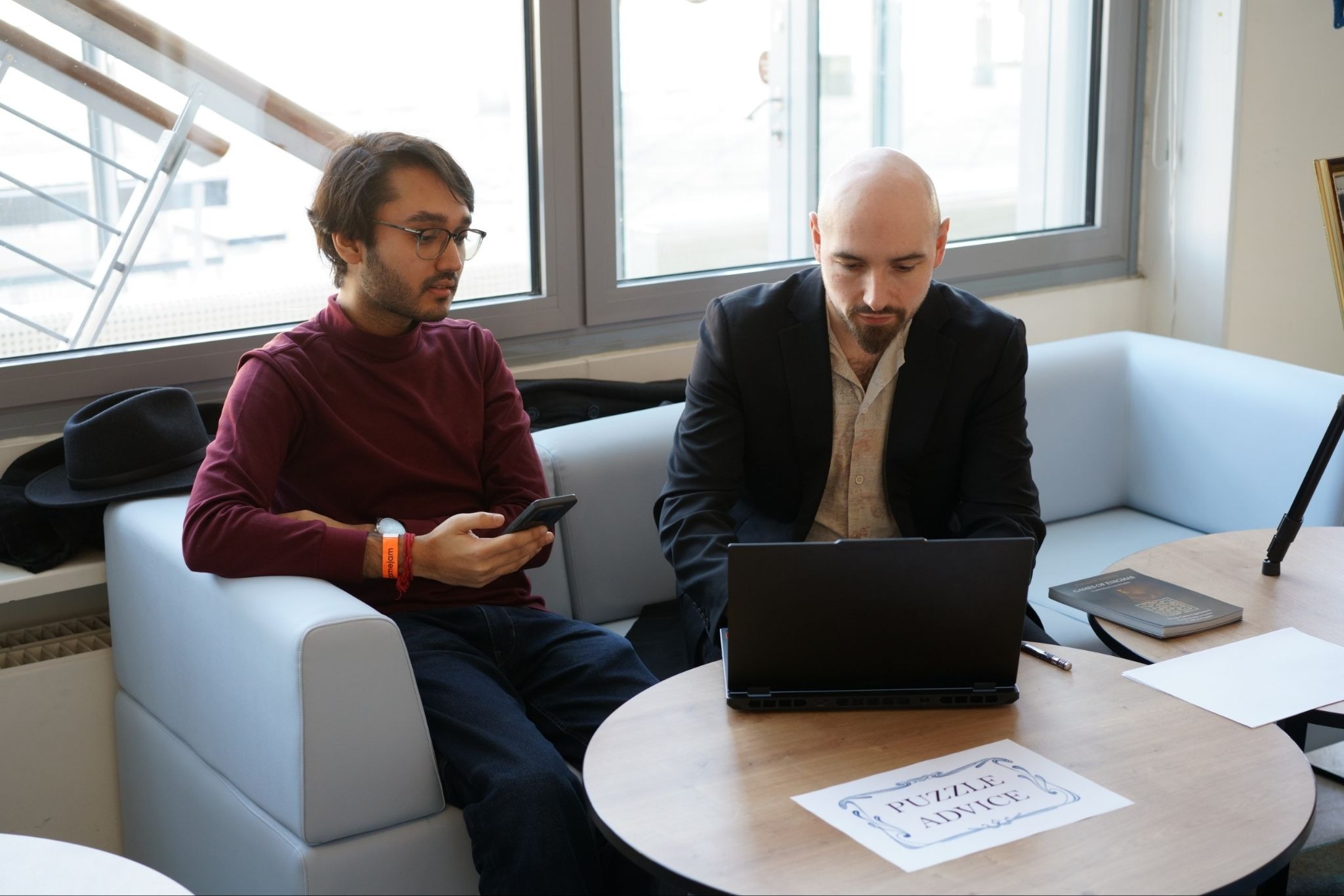
Puzzle Consultation with Erik Fumi, escape room designer
For our game we had decided to build the level in a real life environment, inspired from games like Inside. We built a small prototype for the main mechanic in the evening, playtested it with some people, and realised it is indeed quite fun and has potential.
Note to readers: Try to get a prototype of your jam idea quickly and test it out before committing to it! Playtesting (even amongst yourselves) can reveal a lot of insights on what works and what doesn’t!


(Left) Breakfast, (Right) Lunch
I ran into a major challenge when designing the level. With our decision to set the game in a city, it was crucial to only use urban environmental objects as platforming segments. This meant that it would be difficult to use blocking, as the ‘platforms’ themselves would be these objects, and not only the dimensions, but their shape would also matter. I tried my best to block the level after categorising the different types of lights as our platforming obstacles, and placing them strategically to create the navigational puzzles, but it was not working. Using abstract shapes to block out a level like this felt unnatural.
I realised that being just a level designer will not work, I will have to be an artist as well. So I started drawing the level on paper, using real world props as platforms – things like buildings, streetlights, garbage bins, construction cranes, etc. At around 1 AM, I sat down with Laggy to discuss the whole level, and get her thoughts on the plan I had made. It was a very fruitful collaboration session for me – the artist became the designer and the designer, the artist.
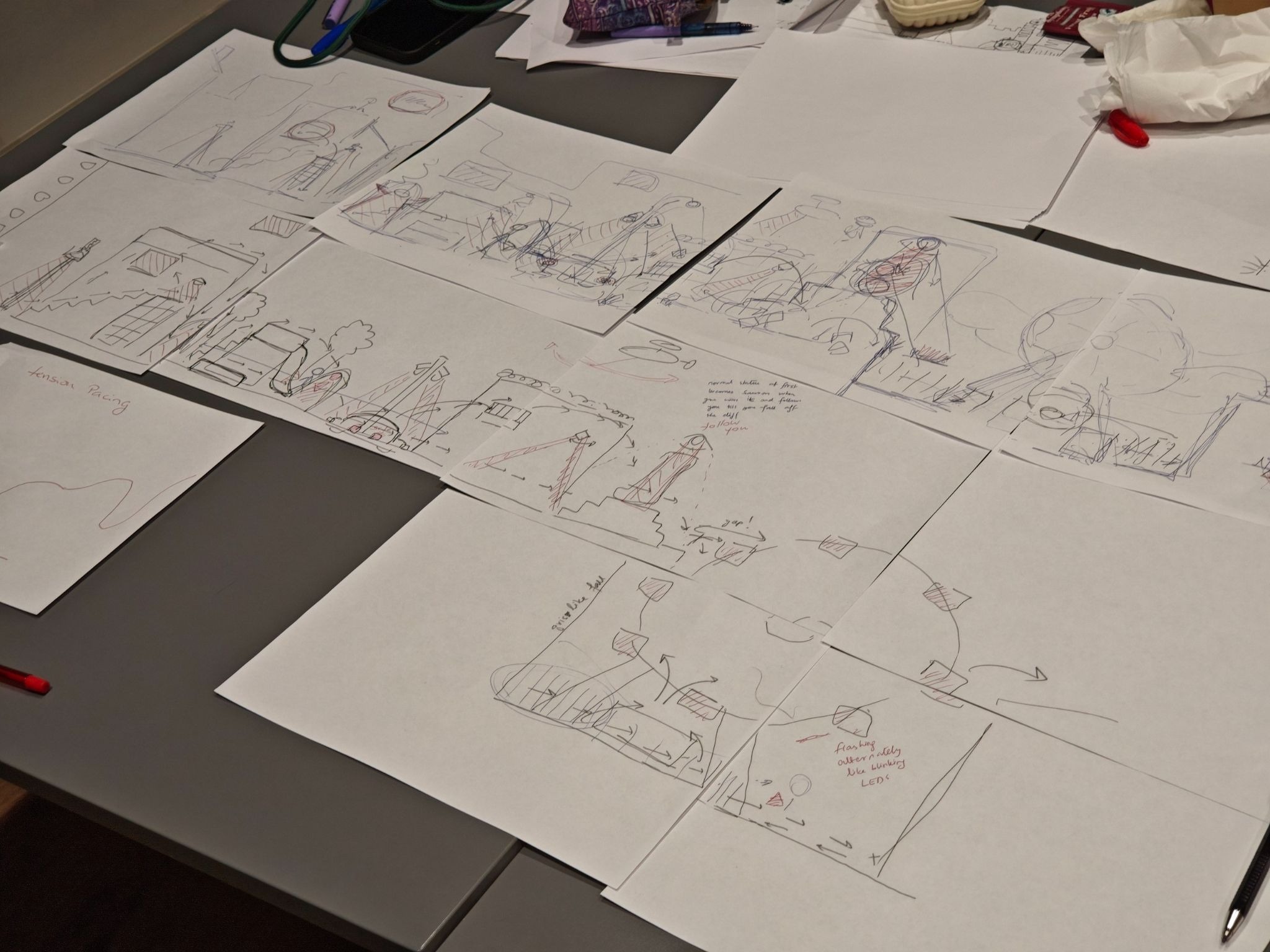
Midnight Level Design sketches
Laggy shared her ideas on how she was visualising the level and the environment – the derelict buildings, walls, lights, etc, and I was helping her strategically place different types of lights throughout the plane, and charting the various routes of movement the player can take. By 2 AM, we had finished the final level design. All that was left now was to create the art assets, and place them in the scene.
Before leaving the campus at 3 AM, I hung out with Laggy and Andreas, a Danish friend I made the previous day, who told us about different types of Danish food and places to visit in and around Copenhagen, while we shared stories of food from our own cuisine.
Day 4 – What doesn’t Start Well, Ends Well
I wish I could tell you that I had a good night’s sleep and came back to the jam site fresh to complete the final tasks, but that didn’t happen.
When I entered my hostel room at night, I found my clothes and items wet and spread over the floor, and someone else’s items kept on my bed. I had to go to reception, and they were clueless as to who this person could be, and how they got access. Thankfully I got a new private room, but it took an hour more and I couldn’t sleep before 4:30.
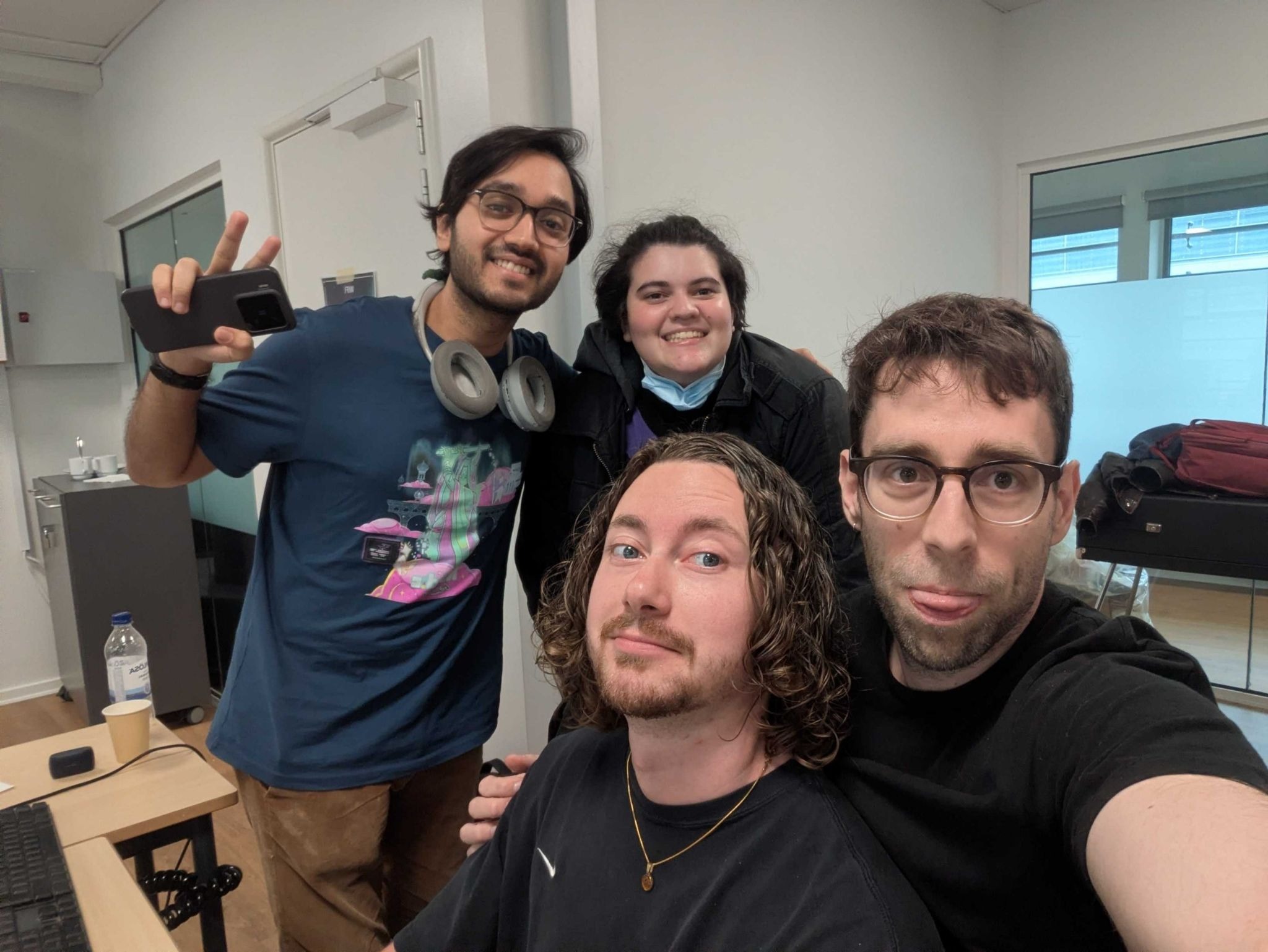
My team, from left to right, (Top), Me, Laggy, (Bottom), Didrik, Marios
My teammates were really supportive, and I want to thank them from the bottom of my heart for putting in the extra effort when I couldn’t – Laggy spent all night creating the assets, and Dedrik and Marios had come early in the morning to implement our level design. I came in later around 11, when there was only 4 hours remaining, and managed to help with the finishing touches like sound manager, sound effects, and UI/UX. It was super fun to record Didrik’s screams, (which you will hear in the main game). I was glad that the game was ready on time, and we didn’t have to crunch too much before the deadline.
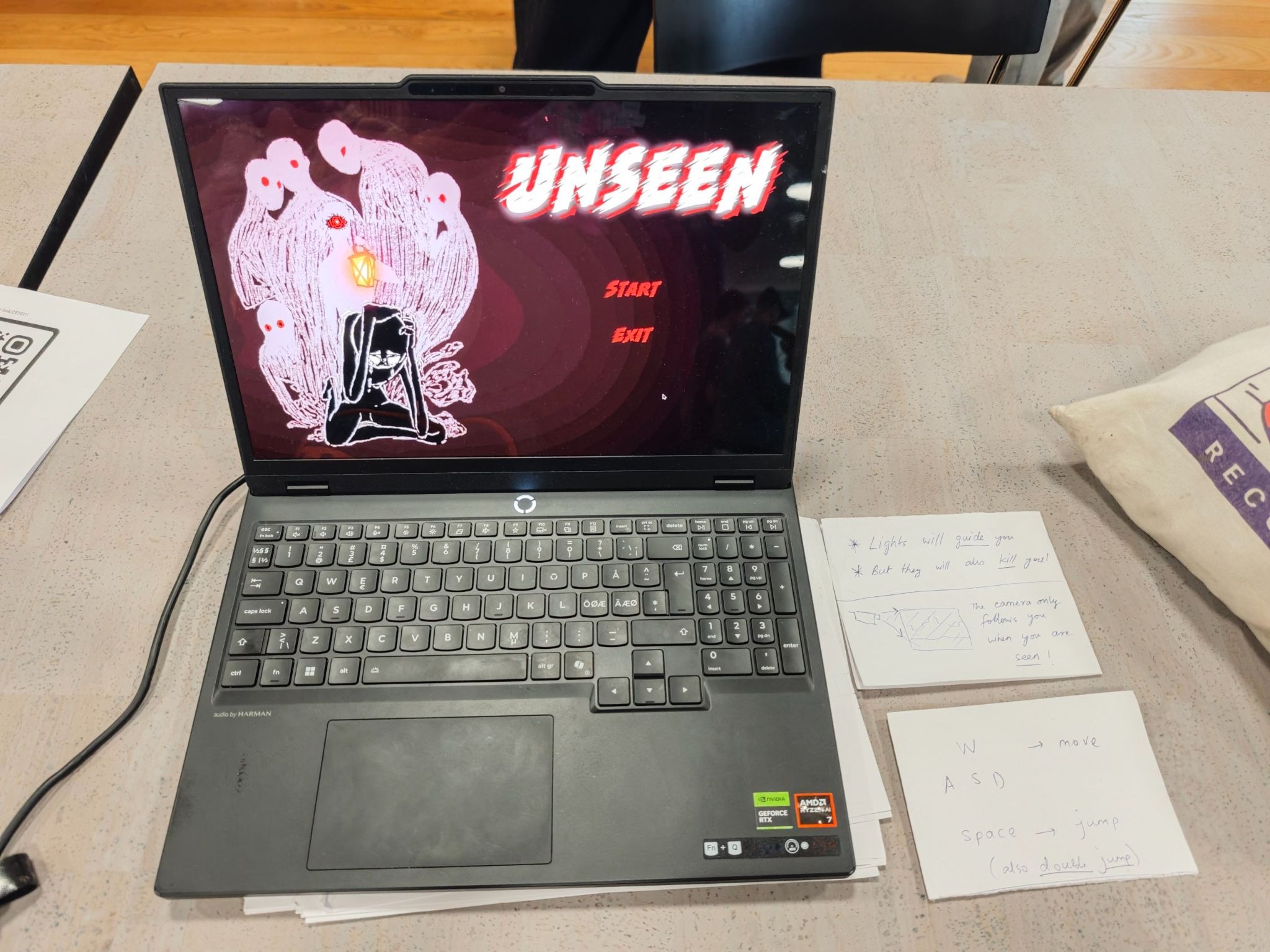
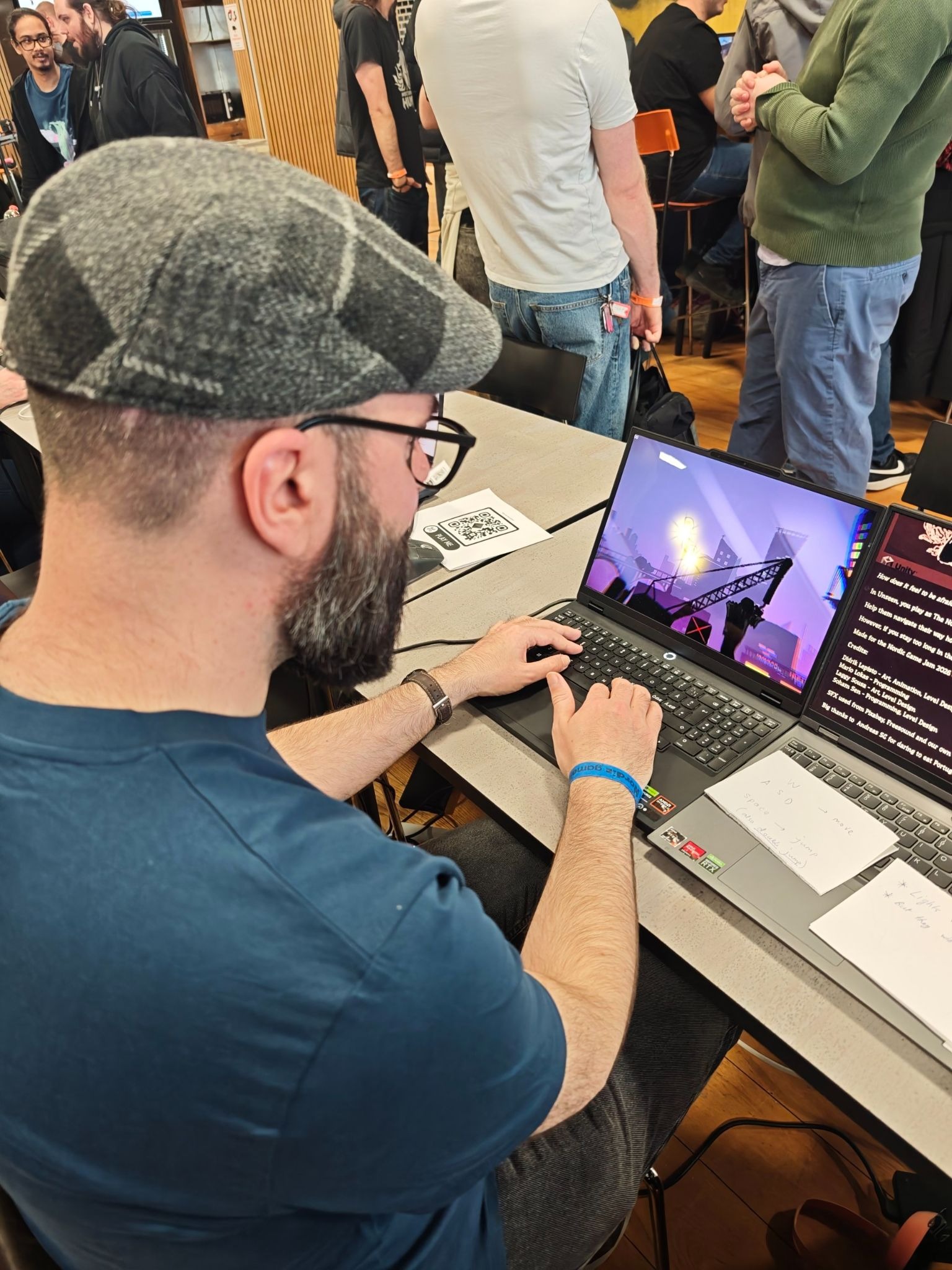
Our game played by people during the final showcase
As the clock struck 3, we gathered all our stuff and went to the common area to set up our laptops and showcase our games. It felt super inspiring and delightful to find myself in a space where people could find not only an outlet for their passion, but also appreciation for it. I am happy to report that we got a great reception on ‘Unseen’, our proud little platformer, with the game getting significant attention even after the jam, covered by two different twitch streamers. We also realised we didn’t really have a tutorial, but players could soon grasp the mechanics, and it was fun to see them make their way to the end of the level.
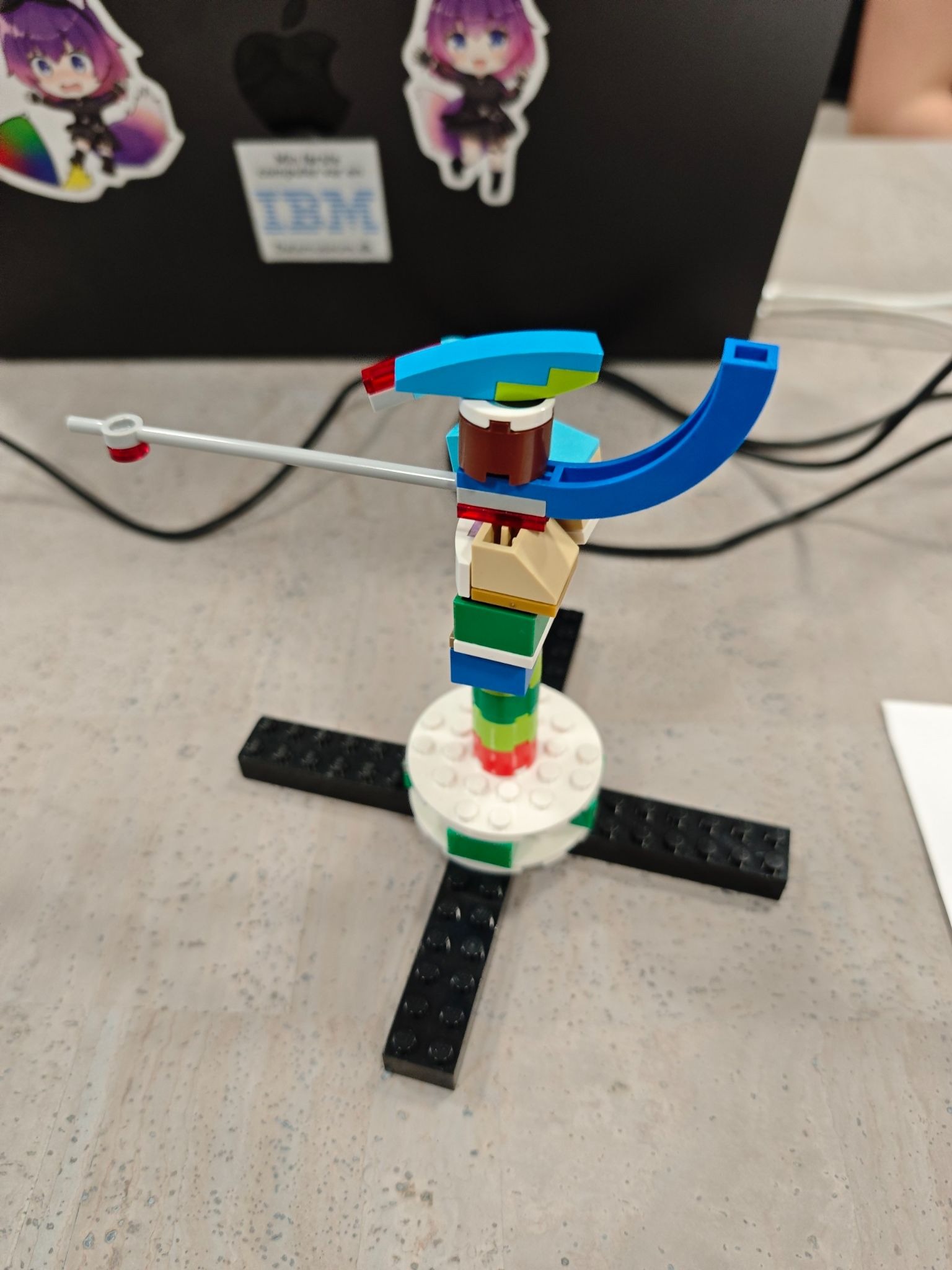
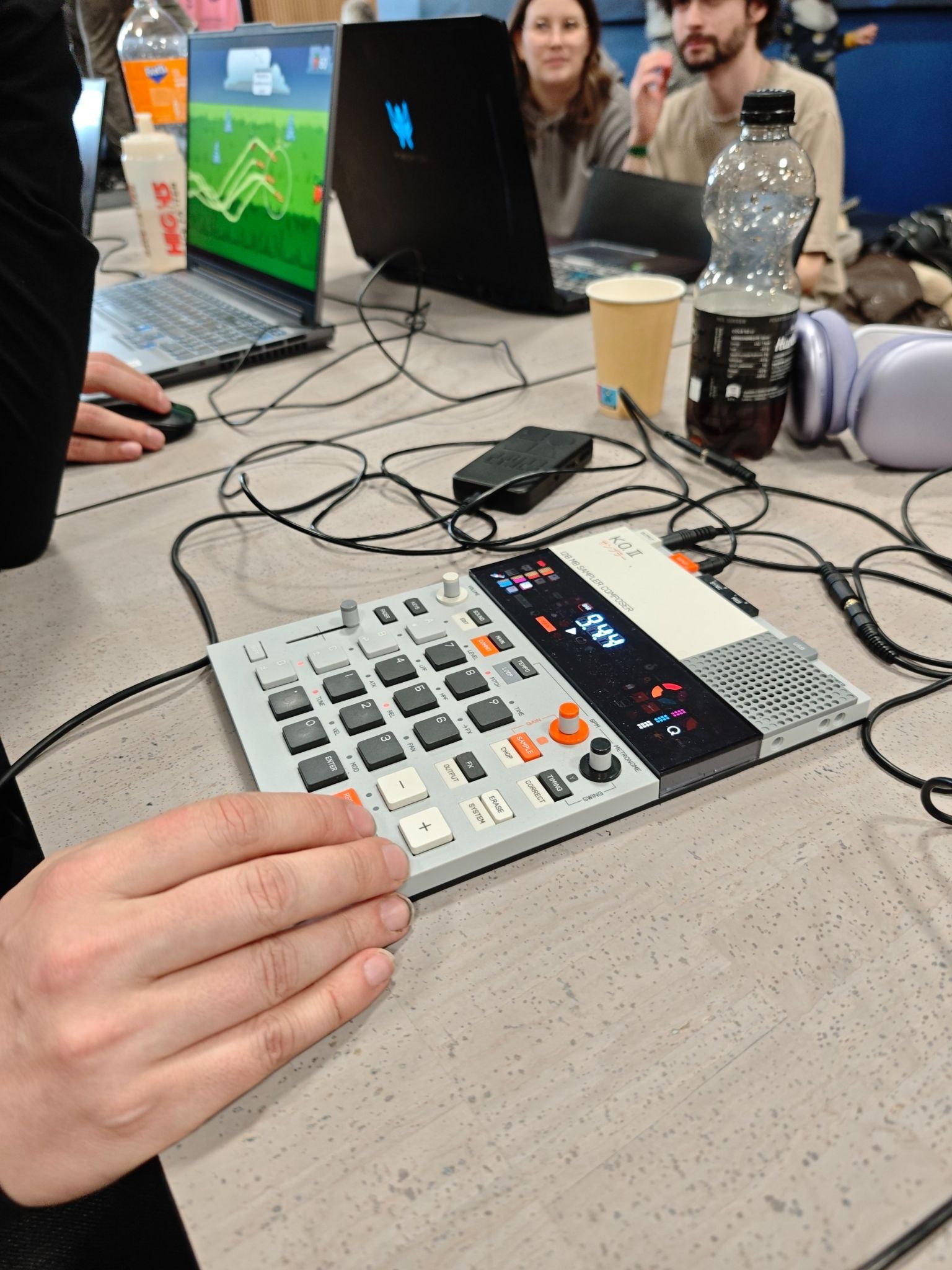
(Left) The LEGO tower I build, (Right) The music sampler which the creator was using
I also tried a lot of cool and quirky games. Many games were about doomscrolling, pop-up ads, and the theme of brainrot. There were a few cat games as well, and quite a few games about monks or reaching salvation, nirvana and inner peace. Two projects I really liked was an alternate controller game where you are playing minigames using a music keyboard, and another live installation game where you are building a jenga tower with lego bricks of different shapes and sizes, and the creator sits next to you composing live background music on his portable sampler as you listen to it through headphones.
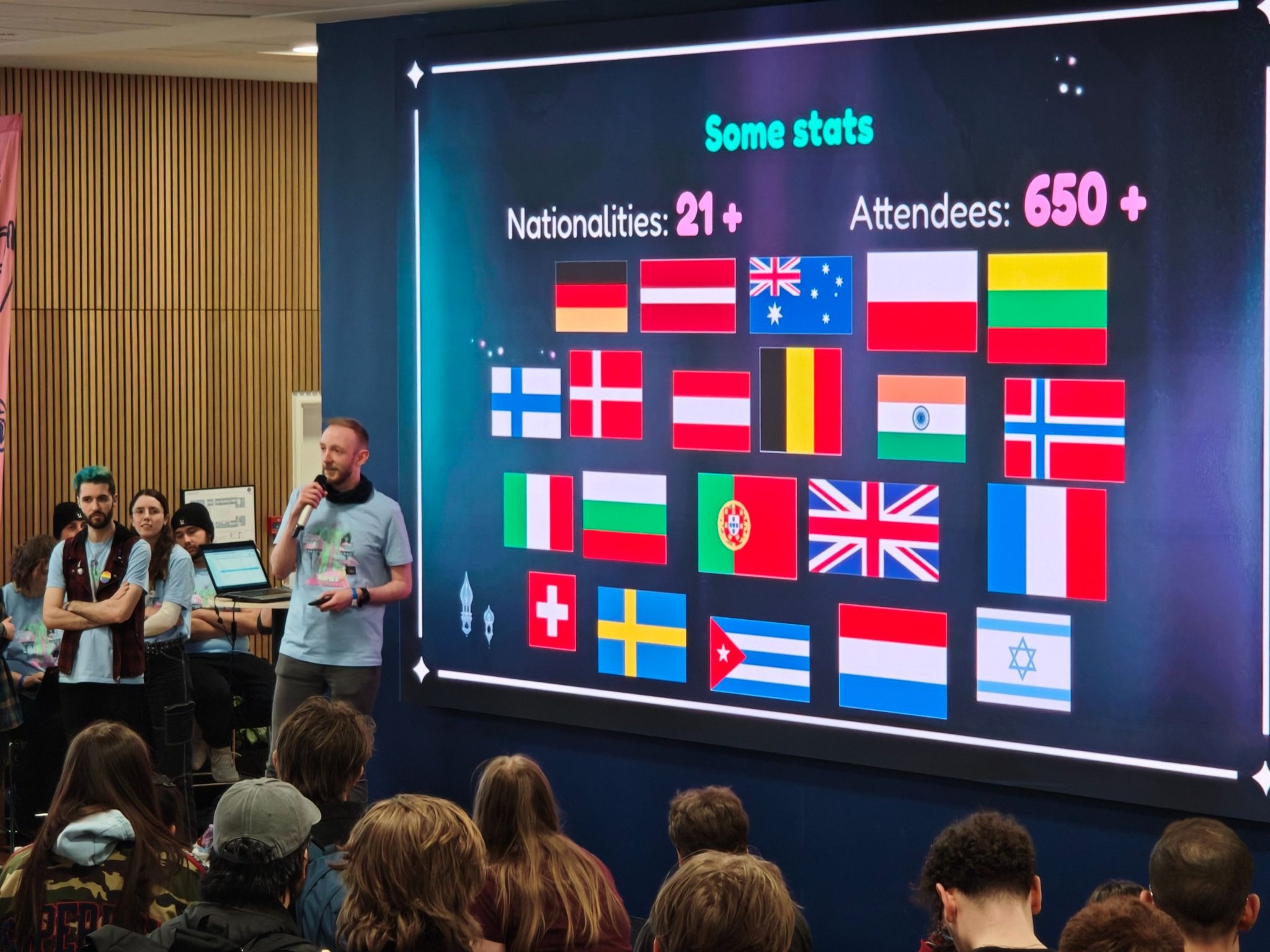
I was the only Indian in the whole Nordic Game Jam!
As the showcase wrapped up, I bade goodbye to my teammates, as well as most of the people I had met during the jam. It felt sad to part with the amazing people that I had met over the last four days, but we shared our socials so that we could remain in touch, and also collaborate in future events.
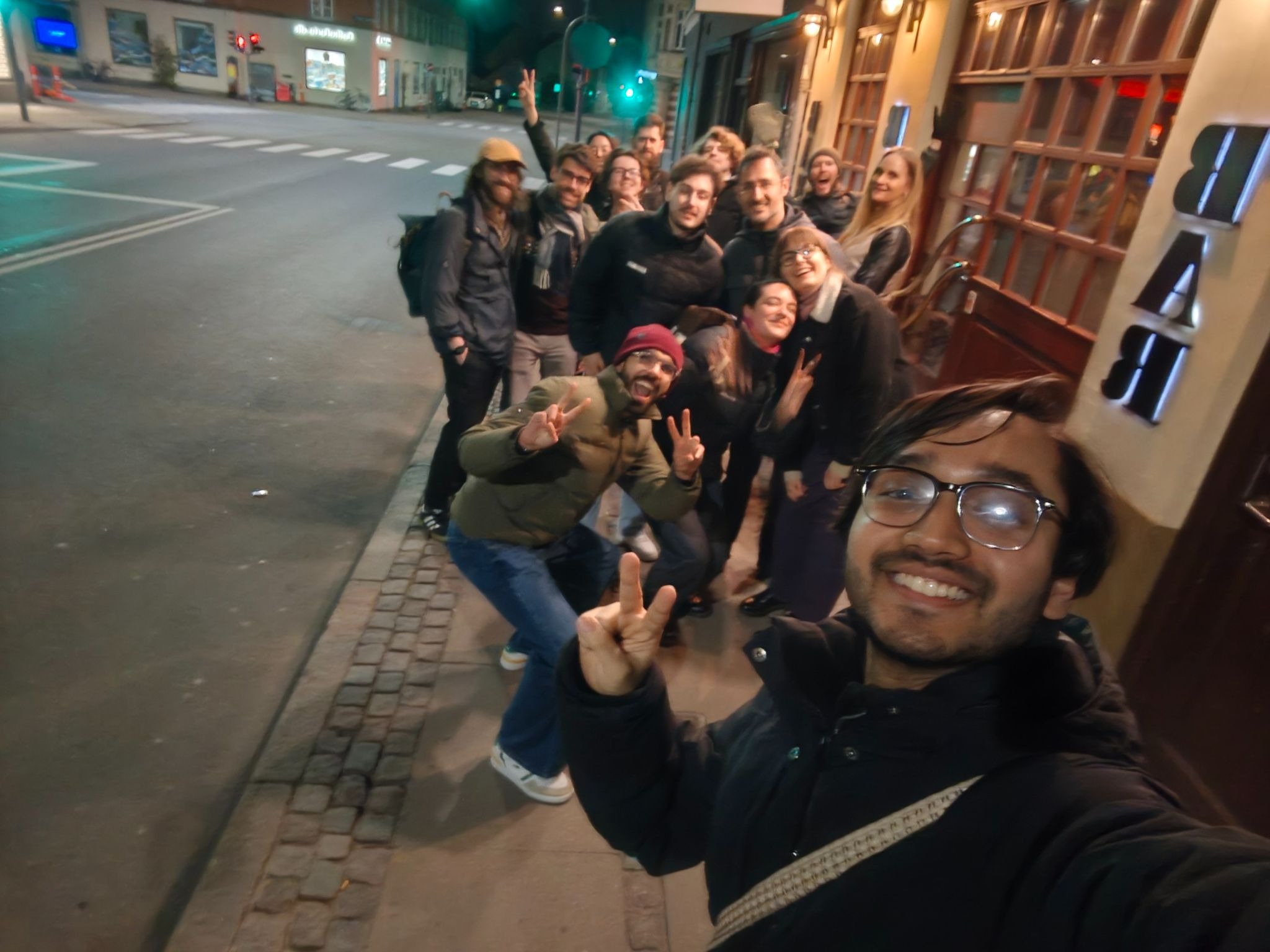
The last of the jammers from the Afterparty
The day concluded with an afterparty held at a board game cafe, where I met more people, and bonded over Danish beer and Landmarks – the first linguistic deduction board game that I have ever played. When the cafe closed, all of us went to the nearest pub, where the conversation continued till midnight on programming, game design, industry and of course, our favourite games. I remember ranting a lot about Unity and its problems to Daniel Kierkegaard Andersen for 15 minutes, without realising he is a senior software engineer at Unity. I was sitting with him and one of the developers of Void Crew, Kristijonas Mališauskas, and both of them were super friendly and shared resources with me for learning more about Unity shaders and graphics programming.
Conclusion
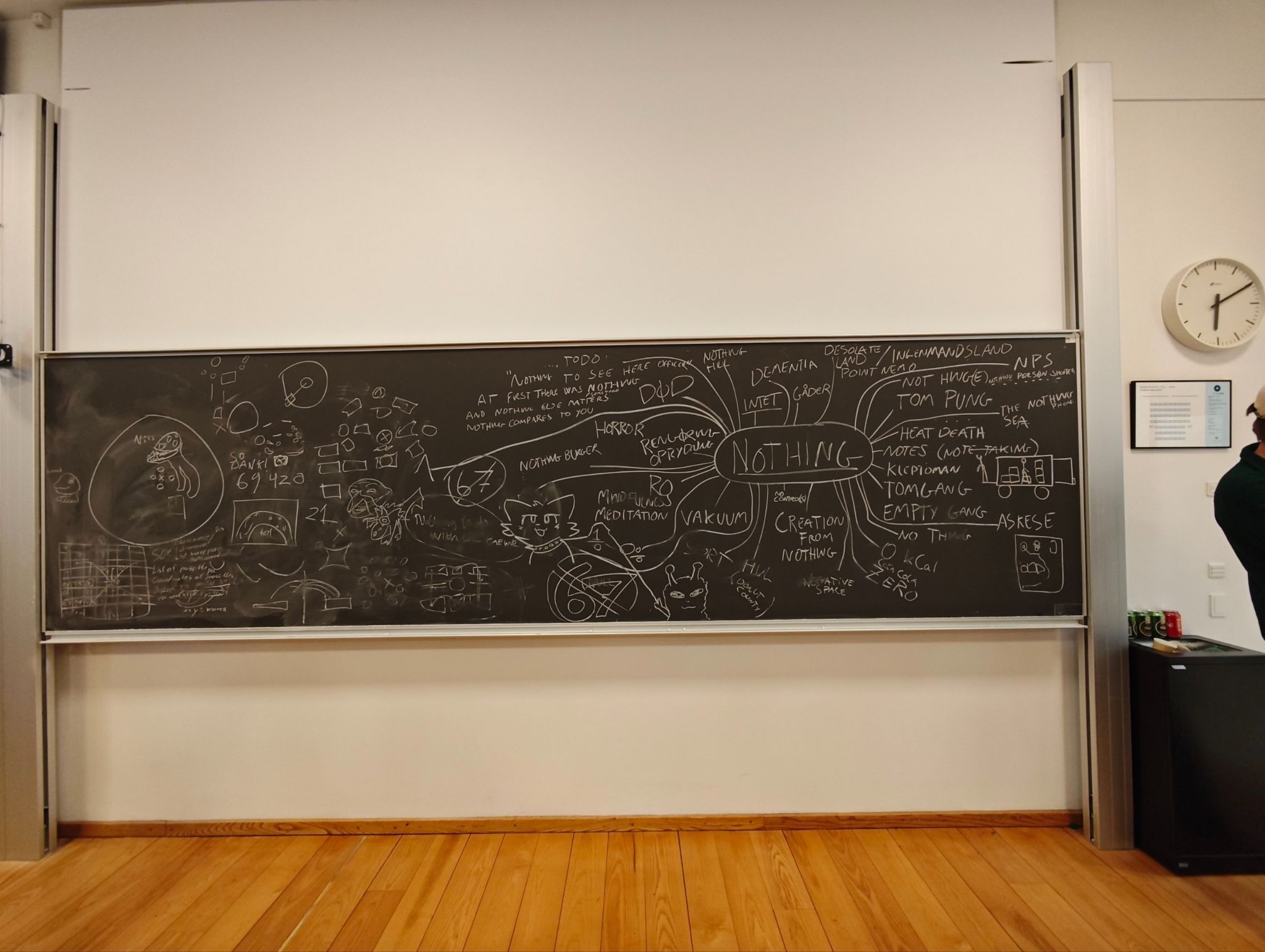
A board used by jammers for brainstorming
I have always been an advocate for game jams and jamming in general. Events like Nordic Game Jam are not only a hub for creativity but also a great place to find like-minded people. Unlike other forms of art, games are better when made in collaboration. They are complex, combined works of playable media, and become richer and more unique when multiple chefs contribute to the recipe.
I only wish it would last longer, but as they say, all good things come to an end. The memories and the friends I made in Nordic Game Jam (even with the sore throat and sticky hostel situation) will forever be etched in my heart. I will encourage everyone reading this to go participate in more game jams, meet people, build crazy things, experiment, fail, and create more magic in this world.
With the rising growth of artificial intelligence, maybe it is human stupidity which will truly create some of the greatest works of all time. Long live game jams!
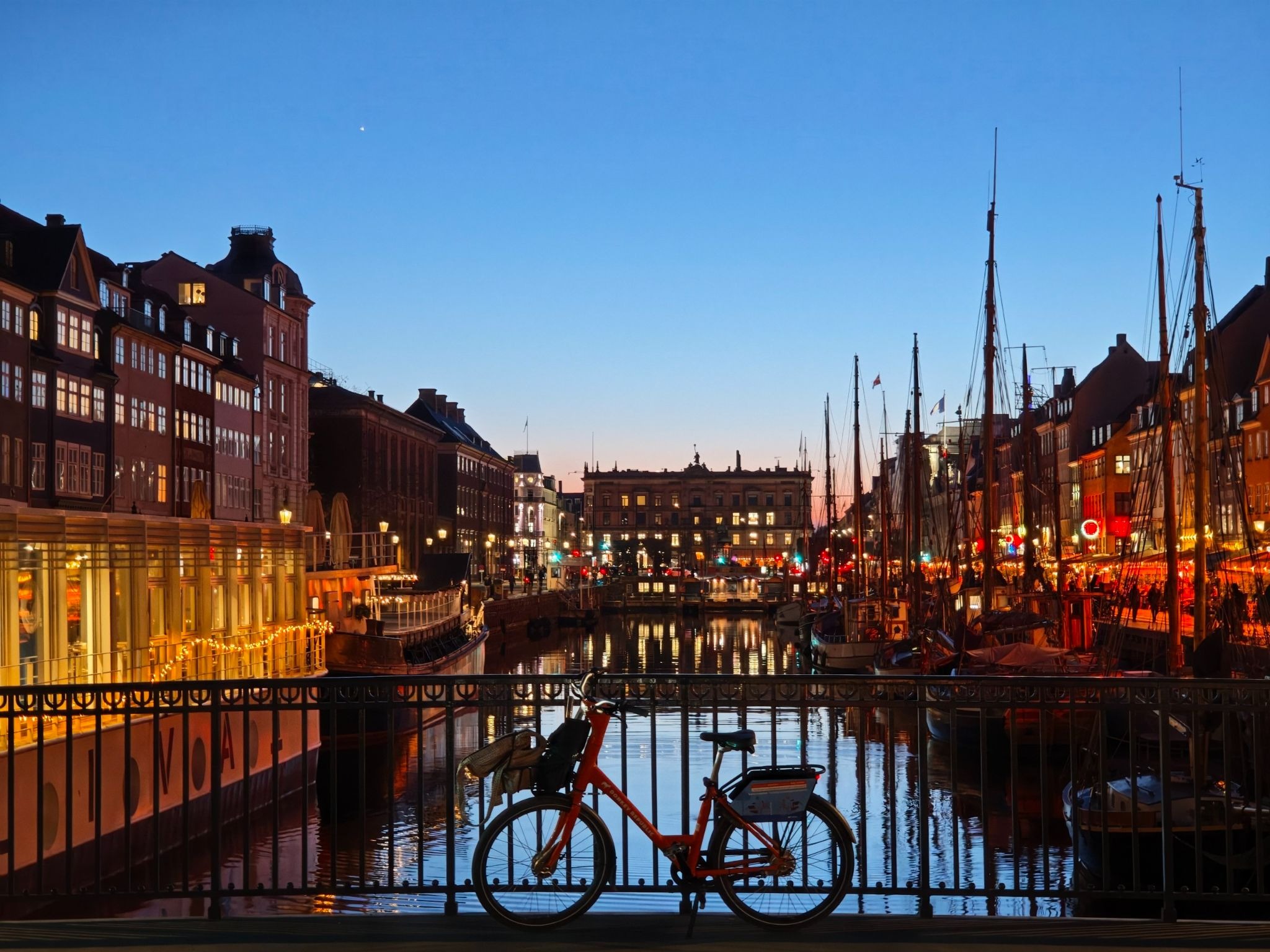
Nyhavn at Sunset, Copenhagen
PS #1: I had the pleasure of staying in Copenhagen for a couple more days and roaming around the city. I would highly recommend exploring the city on a bike. It looks lovely when the Sun is shining, and the people are out on the streets. Also, try the Danish pastries! They are super tasty. I would also recommend a trip to Kronborg Castle and the town of Helsingør. The train ride from Copenhagen will provide you with vistas of the Danish coastline, with the mighty castle greeting you at the very tip of the edge.
PS #2: Generally, the a&o hostel provided a nice experience for everyone else staying there. Perhaps the stars were not aligned, and I was just unlucky to experience the worst possible nights staying at any hostel in Europe. But don’t let it bias you. Airbnbs are generally more expensive, but if you can afford it, I think it’s the safer choice.